
If you’ve been fighting algae in your pool all season (shocking the water, adding algaecide, brushing the walls) and the problem keeps coming back within days, there’s a good chance you’ve been treating the symptom instead of the cause. Phosphates in your pool in San Antonio TX are one of the most overlooked and least understood water chemistry issues in the region, and in a city surrounded by cedar, oak, pecan trees, and agricultural land, the problem is more persistent here than in most other parts of the country.
Here’s the uncomfortable truth: you can maintain perfect chlorine levels and still lose the battle against algae if your phosphate levels are out of control. Understanding why (and what to do about it) changes everything about how you approach pool maintenance in South Texas.
What phosphates are and why San Antonio pools are so vulnerable
The invisible algae fuel you’re probably not testing for
Phosphates are naturally occurring chemical compounds (phosphorus bonded to oxygen molecules) that enter your pool from dozens of sources without you ever knowing it. They don’t make your water smell. They don’t change its color directly. They don’t affect your chlorine reading on a standard test strip. They sit quietly in the water, completely invisible, doing one thing extremely well: feeding algae.
Think of phosphates as fertilizer. Algae needs nutrients to grow, and phosphorus is its primary food source. A pool with low phosphates and slightly imperfect chemistry will still resist algae reasonably well. A pool with high phosphates and perfect chemistry will still struggle, because you’re sanitizing the water while simultaneously leaving a full buffet available for algae growth. As phosphate levels rise above 100 parts per billion (ppb), maintaining a consistently clear pool becomes progressively harder, regardless of how diligently you manage chlorine and pH.
The Pool & Hot Tub Alliance identifies phosphate accumulation as one of the leading contributing factors to persistent algae problems in residential pools, particularly in regions with heavy seasonal vegetation and agricultural activity, both of which describe San Antonio and the surrounding Hill Country area in significant detail.
Where phosphates come from in San Antonio, and why it’s worse here
This is where the local context matters enormously. San Antonio’s specific environment creates phosphate loading conditions that are more intense than most generic pool care guides account for:
Cedar and oak pollen: San Antonio’s infamous mountain cedar season runs from December through February, and the city’s enormous oak and pecan tree population adds another pollen wave in spring. Pollen is loaded with phosphates. Every storm, every windy afternoon, every day during peak pollen season deposits phosphate-rich organic material directly into your pool. A pool in Helotes or Stone Oak surrounded by mature cedar and oak trees can see phosphate levels spike dramatically within 48 hours of a pollen event.
Rain and irrigation runoff: Every time it rains, water running off your lawn carries dissolved fertilizer compounds (many of which contain phosphorus) directly into your pool. If your yard is irrigated with fertilized grass anywhere near the pool, irrigation overspray contributes the same way. Spring storms in San Antonio, which can drop significant rainfall quickly, can elevate phosphate levels in a single event enough to fuel weeks of algae activity.
Swimmer contributions: Body care products, sunscreen, and certain cosmetics contain phosphate compounds that transfer to pool water with every swim. During a busy summer with regular pool use, this source alone adds up meaningfully over the course of a season.
Municipal tap water: San Antonio’s water supply contains low but measurable phosphate levels. Every gallon you add to compensate for evaporation (and in San Antonio’s summer heat, that’s a lot of gallons) brings a small phosphate contribution with it. Over the course of a long swim season with frequent top-offs, this baseline addition accumulates.
Why standard pool tests miss the problem entirely
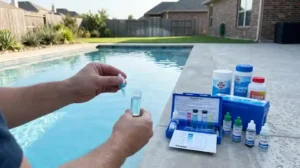
Here’s what catches most homeowners off guard: basic test strips and standard liquid test kits don’t measure phosphates at all. The typical home test kit checks chlorine, pH, alkalinity, calcium hardness, and cyanuric acid, all genuinely important parameters, but none of them reveal your phosphate situation. You can test your water five times a week, see perfect readings across every parameter, and still have a phosphate problem serious enough to cause chronic pool algae in San Antonio conditions.
Detecting phosphates requires a separate, specific test, either a dedicated phosphate test kit available at pool supply stores, or a professional water analysis that includes phosphate measurement as part of a full panel. According to Trouble Free Pool’s water chemistry resources, phosphate testing should be part of every pool owner’s seasonal routine, especially in regions like Central and South Texas where environmental phosphate loading is high. Yet most homeowners in San Antonio have never once tested their phosphate levels, which explains why so many end up in a frustrating cycle of algae treatment that never fully resolves.
How to test, treat, and control phosphates in your pool San Antonio TX
Reading the numbers: What phosphate levels actually mean
Before reaching for a phosphate remover, it helps to understand what you’re measuring and what the numbers mean in practical terms:
- Below 100 ppb: Generally considered acceptable. Algae growth is possible but manageable with normal chlorine maintenance.
- 100–500 ppb: Elevated. You’ll notice chlorine consumption increasing and may see recurring algae issues. Treatment recommended before peak swim season.
- 500–1,000 ppb: High. Consistent algae problems are likely even with otherwise good chemistry. Active treatment needed.
- Above 1,000 ppb: Very high. At this level, maintaining clear water becomes genuinely difficult regardless of chemical inputs. Aggressive treatment required before normal chemistry management can be effective again.
For San Antonio pools, the most common scenario is homeowners sitting in the 300–800 ppb range without knowing it, elevated enough to cause ongoing problems, but invisible without specific testing. A pool in this range will consistently demand more chlorine than expected, may show recurring green or yellow-green cloudiness especially after rain or wind events, and will resist algaecide treatments in ways that feel inexplicable until the phosphate connection becomes clear.

How to actually remove phosphates from your pool
The treatment process for phosphate remover Texas situations is straightforward, but there are a few things worth knowing before you start:
Phosphate removers work by binding to phosphate molecules in the water and converting them into a form that your filter can capture and remove. The product itself is generally lanthanum-based, lanthanum chloride is the most common active ingredient in commercial phosphate removers. It’s safe for swimmers and doesn’t affect chlorine, pH, or other chemical parameters. What it does do, temporarily, is make your water cloudy as it precipitates the phosphates out of solution. That cloudiness is normal and clears within 24–48 hours as the filter removes the precipitated material.
Here’s the practical sequence for treating a San Antonio pool with elevated phosphates:
- Test phosphate levels first to establish your baseline and determine the correct dosing amount, most phosphate removers dose by ppb level and pool volume
- Add the phosphate remover according to package instructions, ideally in the evening when the pool isn’t in use
- Run your filter continuously for 24–48 hours after treatment
- Clean your filter thoroughly within 48 hours — this step is critical and often skipped, but the precipitated phosphates accumulate in your filter media and need to be removed or they simply redissolve back into the water
- Retest phosphate levels 48–72 hours after filter cleaning to confirm reduction
- If levels are still elevated above 200 ppb, a second treatment round may be needed
One important timing note: don’t add phosphate remover right before a large pool gathering. The temporary cloudiness it creates is not visually appealing, and treating it as a routine maintenance step during a quieter period gives you better results without the inconvenience.
Prevention: The ongoing strategy for high-phosphate environments
Treating phosphates once is helpful. Building a routine that keeps them under control through a San Antonio summer is what actually solves the chronic algae problem. Given the environmental conditions in South Texas (the pollen, the fertilizer runoff, the hard tap water) phosphate management needs to be part of your regular maintenance calendar, not just a reactive step when things go wrong.
A practical prevention approach for San Antonio pools looks like this: test phosphate levels monthly during the active season, not just once at opening. Add a maintenance dose of phosphate remover every 4–6 weeks during high-pollen and post-rain periods. Skim debris from the pool surface promptly rather than letting organic material sit in the water overnight. If your yard is fertilized, be mindful of irrigation patterns near the pool and time fertilizer applications to minimize runoff risk. After significant rain events (especially in spring) test and treat proactively rather than waiting for algae to appear.
For homeowners dealing with persistent cloudy pool water causes that haven’t responded to standard chemical treatment, phosphate testing is almost always the missing step. And for pools that have had recurring algae problems through previous seasons, a thorough phosphate treatment at season opening (before the pollen season peaks) is one of the most effective preventive investments you can make.
If your pool has developed an active algae bloom alongside elevated phosphate levels, the phosphate treatment addresses the fuel source but doesn’t kill existing algae on its own. That requires a separate, targeted approach, which our algae removal service in San Antonio handles with professional-grade treatment that addresses both the visible bloom and the underlying chemistry conditions that allowed it to establish.
And if you’ve been noticing that your water chemistry requires more frequent correction than it should (more chlorine, more pH adjustment, more of everything) there may be a hard water component working alongside the phosphate issue. Our article on hard water and pool chemical balancing in San Antonio explains how the mineral content of San Antonio’s water supply creates a chemical environment where multiple imbalances tend to reinforce each other, and what you can do to break that cycle.
FAQ
1. What are phosphates in a pool and why do they matter in San Antonio TX?
Phosphates are naturally occurring chemical compounds that enter your pool from pollen, rain runoff, fertilizers, tap water, and swimmer products. In San Antonio, cedar and oak pollen season, frequent spring storms, and agricultural surroundings make phosphate loading significantly higher than in most U.S. cities. They matter because phosphates are algae’s primary food source, high phosphate levels make it nearly impossible to prevent algae growth consistently, even when chlorine and pH are perfectly maintained. Testing for phosphates requires a separate dedicated test not included in standard pool test kits.
2. How do I know if my pool has a phosphate problem in San Antonio?
The most reliable sign is chronic algae that returns within days of treatment despite otherwise good water chemistry. Other indicators include unusually high chlorine consumption, recurring cloudiness after rain or wind events, and algae that doesn’t fully respond to shock treatment or algaecide. The only way to confirm is a dedicated phosphate test, standard test strips and liquid kits don’t measure phosphates at all. If you’ve never specifically tested for phosphates and you’ve been fighting recurring pool algae in San Antonio, elevated phosphates are almost certainly part of the equation.
3. How do I remove phosphates from my pool in Texas?
Use a lanthanum-based phosphate remover, dosed according to your pool’s volume and current phosphate level. Add the product in the evening, run your filter continuously for 24–48 hours, then clean your filter thoroughly, this last step is critical and often skipped. The treatment temporarily clouds the water as phosphates precipitate out of solution, which is normal and clears within 24–48 hours after filter cleaning. Retest phosphate levels 48–72 hours after filter cleaning to confirm reduction. In high-phosphate environments like San Antonio, a maintenance dose every 4–6 weeks during peak pollen and rain season keeps levels from rebounding.
4. Can I have high phosphates even if my pool water looks clear?
Absolutely, and this is one of the most important things to understand about phosphates in pool water. They’re completely invisible. Clear, blue water can contain phosphate levels high enough to fuel significant algae growth the moment other conditions (a drop in chlorine, a warm night, reduced circulation) provide the right opportunity. Many San Antonio homeowners discover they’ve had elevated phosphates for an entire season without knowing it, only realizing the connection when persistent cloudy pool water causes don’t respond to standard chemical correction. Regular monthly phosphate testing is the only way to know where your levels actually stand.
5. How often should I use phosphate remover in my San Antonio pool?
During the active swim season in San Antonio, a maintenance dose of phosphate remover every 4–6 weeks is a practical preventive approach given the city’s high environmental phosphate loading from pollen, runoff, and tap water. Test levels monthly to guide your treatment timing, if levels stay consistently below 100 ppb, you may be able to extend the interval. After significant rain events or peak cedar pollen periods, test and treat proactively rather than waiting for algae to appear. For pools that have experienced severe phosphate buildup over multiple seasons, an initial heavy treatment followed by a consistent maintenance schedule produces the most lasting results.
