
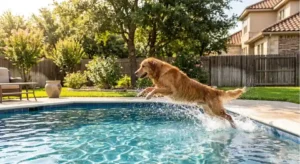
There’s something genuinely joyful about watching a dog leap into a backyard pool on a blazing San Antonio afternoon. That pure, unfiltered enthusiasm (the splash, the paddling, the absolute zero hesitation) is one of those backyard moments that makes pool ownership feel completely worth it. But if you’ve ever noticed your water turning cloudy after a swim session with your dog, or watched your chlorine levels drop faster than usual after a day of canine pool parties, you already know that dogs and pools in San Antonio TX come with a few things worth understanding before you make it a regular summer routine.
This isn’t about keeping your dog out of the pool. It’s about keeping everyone (your dog, your family, and your water) safe and happy through the long South Texas swim season.
What your dog actually does to your pool water
The chemistry of canine pool time
Here’s something most pool owners don’t fully appreciate until they’ve had a few summers of dog swimming under their belt: a single medium-sized dog entering your pool has roughly the same chemical impact as three to five adult human swimmers. That’s not an exaggeration, it’s a reflection of the organic load that dogs introduce into pool water through their fur, skin oils, dander, saliva, and anything else they’ve collected on their coat during the day.
All of that organic material reacts with your pool’s free chlorine the same way human sweat and sunscreen do, it consumes it. And in San Antonio’s heat, where chlorine is already fighting harder than in cooler climates due to UV exposure and higher water temperatures, adding a dog’s worth of organic contaminants to the equation can drop your free chlorine levels noticeably within hours of a swim session.
According to the CDC Healthy Swimming program, organic contaminants from swimmers (human or animal) are one of the primary drivers of chloramine formation and free chlorine depletion in residential pools. The recommendation is consistent regardless of the source: test water chemistry after any heavy use event and adjust accordingly before the next swim session.
What happens to your filter, and why it matters
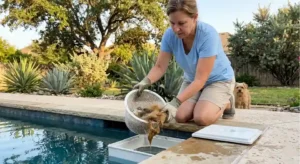
Beyond the chemistry, dog fur is genuinely hard on pool filtration systems. Unlike human hair, which is relatively fine and smooth, dog fur (particularly from double-coated breeds like Labs, Golden Retrievers, German Shepherds, and Huskies) is dense, textured, and sheds in volume. It clogs skimmer baskets quickly, accumulates in filter cartridges faster than standard debris, and if left unmanaged, can reduce your filter’s flow rate enough to affect overall water circulation.
Reduced circulation means less effective chemical distribution, which means chemistry imbalances develop faster and stay localized longer. For pool maintenance with dogs in San Antonio’s long swim season, this creates a compounding problem: more organic load from the dog, less effective filtration to manage it, and a hotter, more UV-intense environment that’s already working against your chemistry.
The practical fix is straightforward but requires consistency. Check and clean your skimmer baskets after every dog swim session, not weekly, after every session. Rinse your filter cartridge more frequently during periods of regular dog use, and plan for a full cartridge cleaning or backwash cycle at least every two weeks rather than monthly. It sounds like extra work, and honestly it is, but it’s far less work than recovering from a green pool or dealing with a clogged impeller in your pump.
Pet safe pool chemicals: What’s actually safe for your dog
This question comes up constantly, and it deserves a clear, direct answer. Standard pool chemicals (chlorine, pH adjusters, alkalinity products) are generally safe for dogs when the pool is properly maintained and chemical levels are within the recommended ranges before swimming.
The key phrase there is “properly maintained.” A well-balanced pool with free chlorine between 1 and 3 ppm and pH between 7.2 and 7.6 is not harmful to dogs for recreational swimming. The problems arise when chemistry is out of balance, particularly when chlorine levels are elevated after a shock treatment, or when pH has drifted significantly in either direction.
For pet safe pool chemicals Texas conditions, the same rules that apply to human swimmers apply to dogs: don’t allow swimming immediately after shock treatment, wait until free chlorine has dropped back to the normal range (test before letting your dog in after any chemical treatment), and never let your dog swim in water that smells strongly of chemicals, appears cloudy, or has visible algae growth.
What you do want to be more cautious about are certain specialty pool products, some algaecides contain copper sulfate, which can be harmful to dogs in sufficient quantities. According to the American Kennel Club’s health resources, copper-based algaecides should be avoided in pools where dogs swim regularly. Look for copper-free algaecide alternatives, which are widely available and equally effective for most common algae situations.
Protecting your dog and keeping your water clean all season
Pool water quality with pets: The weekly routine adjustment
Managing pool water quality pets situations through a San Antonio summer requires a slightly modified maintenance routine compared to a dog-free pool. The modifications aren’t dramatic, but skipping them consistently leads to the kind of water quality degradation that’s frustrating and expensive to recover from.
Here’s what a dog-inclusive weekly pool maintenance routine looks like in practice:
- Test water chemistry after every dog swim session, not just weekly. Focus on free chlorine and pH, which are most immediately affected by organic load.
- Shock the pool weekly during periods of regular dog use, rather than the standard bi-weekly schedule. Use a non-chlorine shock if you want to minimize wait time before the next swim.
- Clean skimmer baskets after every dog session, fur accumulates fast and clogs baskets in a single afternoon of active swimming.
- Brush pool walls and floor twice weekly, dog dander and skin oils settle on surfaces and create a biofilm layer that standard circulation doesn’t fully address.
- Check and clean your filter cartridge every two weeks during heavy dog use periods, monthly cleaning is insufficient when you’re adding significant fur and dander load regularly.
- Rinse your dog before they enter the pool, a quick hose-down removes loose fur, dirt, and whatever your dog rolled in that afternoon, reducing the organic load entering the water dramatically.
That last point is worth emphasizing. A 60-second rinse before your dog jumps in makes a measurable difference in how quickly your chemistry shifts during and after the swim session. It’s the same principle as rinsing off before human swimming, simple, effective, and easy to make into a habit.
Safety considerations beyond water chemistry
Pool maintenance with dogs in San Antonio involves more than just chemistry and filtration. Physical safety for your pet is worth addressing directly, because pool-related accidents involving dogs are more common than most owners expect, particularly with older dogs, small breeds, and dogs that aren’t strong swimmers.
Every pool where dogs swim regularly should have a clearly accessible exit point that the dog can use independently. Most pools have steps in one corner, make sure your dog knows where they are and can use them without assistance. Consider installing a pet-specific pool ramp if your dog is older, has joint issues, or struggles with pool steps. These ramps attach to the pool wall and provide a gentle incline that any dog can navigate regardless of size or mobility.
Keep a close eye on how long your dog swims in one session. Dogs, especially retrievers and working breeds, will swim past the point of fatigue if there’s a ball or toy involved. Overexertion in San Antonio’s heat is a genuine risk, heat exhaustion in dogs can develop faster than most owners anticipate when you combine vigorous swimming with ambient temperatures above 95°F.
As the American Kennel Club advises, always rinse your dog with fresh water after pool swimming to remove residual chlorine and chemicals from their coat and skin, and pay attention to ear health — dogs that swim frequently are more prone to ear infections, and a quick ear dry-out after each swim goes a long way toward prevention.
When Your Pool Needs Professional Attention After Heavy Dog Use
If you’ve had a summer of regular dog swimming and your water has developed a persistent cloudiness that doesn’t clear with standard chemical adjustment, or if you’re noticing unusual filter pressure despite regular cleaning, it’s worth having a professional assess the situation. Heavy organic load from pets can overwhelm filtration systems in ways that aren’t always visible until the problem has been building for weeks.
A professional pool service visit after a season of heavy dogs and pools in San Antonio TX use can identify whether you’re dealing with a filtration issue, a chemistry imbalance, or accumulated biofilm on surfaces that needs a targeted deep clean to fully resolve. Catching those issues before they compound through the remainder of the season saves both money and water quality headaches.
For a deeper understanding of how San Antonio’s specific water conditions interact with everything (including the additional organic load from pet swimming) our article on hard water and pool chemical balancing in San Antonio gives you the full local picture that makes every maintenance decision more informed.
FAQ
1. Is it safe for dogs to swim in a chlorinated pool in San Antonio TX?
Yes, a properly maintained pool with free chlorine between 1 and 3 ppm and pH between 7.2 and 7.6 is safe for dogs to swim in recreationally. The key word is “properly maintained.” Avoid letting your dog swim immediately after shock treatment, in visibly cloudy or green water, or in water with a strong chemical smell. Always rinse your dog with fresh water after swimming to remove residual chemicals from their coat, and dry their ears thoroughly after each session to prevent moisture-related ear infections.
2. How do I keep my pool clean when my dog swims in it regularly?
Pool maintenance with dogs requires a modified routine compared to a dog-free pool. Test chemistry after every swim session rather than just weekly, shock weekly during regular dog use periods, clean skimmer baskets after every session, and rinse your filter cartridge every two weeks instead of monthly. Rinsing your dog with a hose before they enter the pool removes loose fur and reduces the organic load entering the water significantly. These adjustments add modest time to your routine but prevent the compounding water quality issues that regular dog swimming creates without active management.
3. What pool chemicals are safe for dogs in Texas?
Standard pool chemicals (chlorine, pH adjusters, alkalinity products) are safe for dogs when used correctly and when water chemistry is within normal ranges before swimming. The main exception to watch for is algaecides containing copper sulfate, which can be harmful to dogs in sufficient quantities. Use copper-free algaecide alternatives in pools where dogs swim regularly. For pet safe pool chemicals Texas conditions, the same rule applies as for human swimmers: always test before swimming after any chemical treatment and ensure free chlorine has returned to the 1–3 ppm range.
4. Why does my pool get cloudy faster when my dog swims in it?
A medium-sized dog introduces roughly the same organic load as three to five adult human swimmers, fur, dander, skin oils, and saliva all react with free chlorine and consume it rapidly. In San Antonio’s heat, where UV exposure already depletes chlorine faster than in cooler climates, adding significant organic material from a dog swimming session can noticeably drop free chlorine and cloud the water within hours. Testing and adjusting chemistry after each dog swim session, combined with weekly shocking during regular use periods, keeps pool water quality with pets from degrading between regular service visits.
5. Does dog fur damage pool filters in San Antonio?
Yes, dog fur, particularly from double-coated breeds, clogs skimmer baskets and filter cartridges significantly faster than standard debris and human hair. Dense fur accumulation reduces filter flow rate, which affects overall water circulation and chemical distribution. During periods of regular dog swimming, clean skimmer baskets after every session and increase filter cartridge cleaning to every two weeks rather than monthly. If you notice consistently higher filter pressure readings or reduced return jet flow, fur accumulation in the filtration system is the most likely cause and warrants immediate cleaning.
