
That grinding sound coming from your equipment pad doesn’t get any less concerning just because you live out in Medina County instead of closer to the city. If anything, pool pump repair in Hondo TX comes with a wrinkle that San Antonio homeowners rarely have to think about: a meaningful number of properties out here run on well water rather than municipal supply, and that single difference changes how your pump ages, what fails first, and what a fair repair quote should actually look like.
This guide walks through the warning signs worth knowing, what repairs genuinely cost in 2026, and the one local factor that catches a lot of Hondo homeowners by surprise the first time their pump starts acting up.
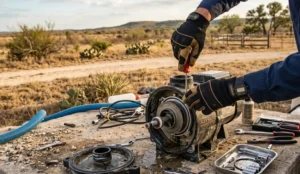
Why pool pumps in Hondo wear differently than pumps closer to San Antonio
The well water factor most pump guides never mention
If your property relies on a private well (common throughout Medina County and the more rural stretches around Hondo) your pool pump is dealing with something that municipal water customers in San Antonio don’t face nearly as often. According to Angi’s guide on filling pools with well water, well water “often contains trace minerals and metals” that “can damage the pool, clog filters and pipes”, and that damage doesn’t stop at the filter. It reaches the pump too.
Sediment and dissolved minerals that come up with well water wear down pump seals and impellers faster than treated municipal water does, simply because there’s more particulate matter passing through the system on a regular basis. Iron and manganese (common in well water throughout this part of Texas) oxidize on contact with pool chemicals and can leave residue inside pump housings over time, contributing to the kind of gradual performance decline that often gets misread as “the pump just getting old” rather than a specific, addressable cause.
For pool pump repair in Hondo TX, this means two things worth knowing upfront. First, if your pool fills from a well, expect your pump to need attention slightly sooner than the standard lifespan numbers suggest. Second, when something does go wrong, sediment or mineral fouling inside the pump housing is a real possibility that a generic online diagnosis won’t catch, it usually takes someone physically opening the unit to confirm.
How long pumps actually last in Texas heat
Setting the well water factor aside for a moment, Texas’s climate alone puts more demand on pool pumps than most of the country experiences. According to WaterTex Pools’ equipment lifespan guide, a standard pool pump in Texas conditions typically lasts 8 to 12 years, with the range depending heavily on maintenance quality and pump type, variable-speed pumps tend to last longer than single-speed models due to more efficient, less strenuous operation.
In Hondo specifically, where summer temperatures regularly climb into the triple digits and the swim season stretches nearly nine months, pumps log more annual operating hours than equipment in shorter-season climates. Add well water mineral content into that equation for properties that have it, and you’ve got a combination that makes proactive monitoring more valuable here than almost anywhere else in the region.
Recognizing the warning signs before they become emergencies
The same core warning signs apply whether your water comes from a well or the municipal line, but a couple of them show up with extra urgency in Hondo’s conditions. A grinding or screeching noise almost always points to worn bearings, and in well water systems, that wear can be accelerated by fine sediment working its way into places it shouldn’t be. Weak suction or noticeably reduced flow at your returns often signals a partially clogged impeller, which well water properties experience more frequently than municipal water properties due to the higher particulate load passing through the system.
Visible leaking around the pump housing points to failing seals, components that, per the well water research above, wear faster when mineral-rich water is constantly cycling through them. And a rising electric bill without an obvious explanation often means your motor is straining to do a job it used to do with less effort, regardless of water source.
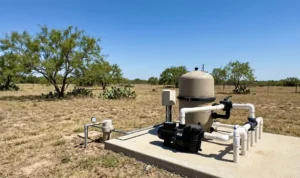
What repair actually costs and how to decide what’s worth fixing
Real 2026 pool pump repair costs in the Hondo area
According to Bluewater Pools’ 2026 Texas repair cost data, pool pump repairs across Texas typically range from $250 to $1,200 depending on what’s actually failing, with the wide range reflecting everything from a simple seal replacement to a full motor swap. The same source notes that Texas’s intense heat and sun exposure “can accelerate equipment wear, sometimes requiring more extensive repairs than in milder climates”, a reality that applies to Hondo as much as anywhere in the state, and arguably more so for properties dealing with well water on top of the heat.
Breaking that range down further: bearing replacement typically runs on the lower end, seal and leak repairs land in the middle, and a full motor replacement sits toward the higher end of that $250 to $1,200 window. A complete pump replacement (not just a component) generally runs higher still once you include both equipment and professional installation labor.
Licensed technician labor rates in Texas have also shifted in 2026, with Bluewater Pools noting current rates of $85 to $120+ per hour for properly licensed work. This matters specifically because pool equipment repair involving electrical components legally requires a technician holding a Residential Appliance Installer’s License (RAIL) in Texas, cutting corners with an unlicensed handyman on pump electrical work isn’t just risky, it’s against state requirements.
DIY vs. professional: What’s actually reasonable to handle yourself
Some pump-related tasks are genuinely within reach for a hands-on Hondo homeowner. Cleaning out debris from the pump basket, checking and lightly lubricating an accessible O-ring, and basic visual inspection for leaks are all reasonable DIY territory.
Where DIY stops making sense is anything involving the motor itself, electrical connections, or impeller disassembly. Beyond the licensing requirement mentioned above, well water systems specifically benefit from a trained eye that can distinguish ordinary wear from mineral fouling, a distinction that affects not just the repair approach but whether additional preventive steps (like a sediment pre-filter on your fill line) are worth adding going forward.
The repair vs. replace question for Hondo pumps
The same general rule of thumb applies here as anywhere: if a repair quote climbs above roughly half the cost of a comparable new pump, replacement typically makes more financial sense. But for Hondo homeowners on well water specifically, there’s an additional consideration worth factoring in. If your current pump has been struggling with recurring seal or bearing issues that trace back to mineral content in your fill water, replacing the pump alone without addressing the water quality issue often means facing the same problem again within a year or two. In that situation, pairing a pump replacement with a sediment pre-filter or periodic metal sequestrant treatment protects the investment rather than just resetting the clock on the same underlying problem.
Pump age matters just as much in Hondo as anywhere else. A 3 year old pump with a single failed component is almost always worth repairing. A pump pushing 9 or 10 years that’s now facing a motor issue, particularly on a well water system, is a much stronger candidate for replacement, you’re not just fixing today’s problem, you’re avoiding a second expensive call next season.
Why a local diagnosis beats guessing from symptoms alone
Diagnosing a pump issue from the sound or symptom alone gets you in the right neighborhood, but only an actual hands-on inspection confirms what’s really happening, especially when well water mineral fouling is a possibility that a generic troubleshooting guide written for municipal water customers won’t even mention. A technician familiar with Hondo and Medina County properties recognizes these well-water-specific wear patterns quickly, rather than treating every pump issue as identical to one on a San Antonio municipal water system.
If you’re noticing any of the warning signs covered here (unusual noise, weak flow, visible leaking, or rising electric costs) our pool equipment repair service covers the Hondo and Medina County area with diagnostic experience specific to both Texas heat stress and well water conditions, catching smaller issues before they become full equipment failures.
And if your pool runs on well water and you’re trying to get ahead of mineral-related wear across your whole system (not just the pump) our article on above ground pool maintenance in Hondo TX covers the broader hard water and equipment care strategy that applies whether your pool is above ground or in-ground.
FAQs
How does well water affect pool pumps in Hondo TX differently than municipal water?
Well water common throughout Medina County often carries trace minerals, sediment, and metals like iron and manganese that wear down pump seals and impellers faster than treated municipal water. This sediment and mineral content can also foul pump housings over time, contributing to performance decline that’s often mistaken for normal aging. If your pool fills from a well, expect to monitor your pump slightly more closely and consider a sediment pre-filter on your fill line as a preventive measure against this accelerated wear pattern.
How much does pool pump repair cost in Hondo TX in 2026?
Pool pump repairs across Texas typically range from $250 to $1,200 depending on the specific issue, bearing replacement falls on the lower end, while motor replacement runs toward the higher end of that range. Licensed technician labor rates currently run $85 to $120+ per hour in Texas, reflecting state licensing requirements for any electrical work on pool equipment. Hondo’s heat and, for well water properties, additional mineral wear can push repair frequency slightly higher than in milder climates or municipal-water-only areas.
How long do pool pumps last in Hondo TX’s climate?
Standard pool pumps in Texas conditions typically last 8 to 12 years, though Hondo’s intense summer heat and nearly nine-month swim season mean pumps here accumulate more annual operating hours than equipment in shorter-season climates. Properties on well water may see pump components wear faster due to mineral and sediment content in the fill water. Variable-speed pumps generally last longer than single-speed models due to more efficient, less strenuous operation across their lifespan.
Can I repair my own pool pump in Hondo TX?
Basic tasks like cleaning pump baskets and visual leak inspection are reasonable for a hands-on homeowner. However, Texas law requires a Residential Appliance Installer’s License (RAIL) for any electrical work on pool equipment, including motor repairs or replacements. Beyond the legal requirement, well water systems specifically benefit from a trained technician who can distinguish ordinary wear from mineral fouling, a distinction that affects the right repair approach and whether additional preventive measures are worth adding.
Should I repair or replace my pool pump in Hondo TX?
If a repair quote exceeds roughly half the cost of a comparable new pump, replacement is generally the smarter financial choice. For Hondo homeowners on well water specifically, also consider whether recurring seal or bearing failures trace back to mineral content in your fill water, if so, pairing a replacement with a sediment pre-filter or periodic metal sequestrant treatment protects your new investment rather than facing the same failure again within a year or two.
