
If you just got a pool, this new pool owner guide San Antonio TX is the first thing you should read. Seriously, before you buy a single chemical, before you touch that pump, before anything. Every summer, hundreds of homeowners across Bexar County find themselves standing at the edge of that shimmering blue water thinking, “Okay… now what?” Excited. A little overwhelmed. And honestly not sure where to start. That’s exactly why this guide exists.
No jargon, no scare tactics, just the real, practical stuff you need to get through your first season without turning your backyard oasis into a green swamp.
Understanding What You Actually Own
Your pool is a living system treat it like one
Here’s the thing most people don’t realize until something goes wrong: a pool isn’t just water in a hole. It’s a system. A surprisingly intricate one. You’ve got a pump, a filter, skimmers, return jets, drains, maybe a heater or an automatic chlorinator, and every single piece has a job to do. When one part struggles, the whole thing feels it, usually fast.
The pump is the heart. It keeps water moving, and moving water is clean water, stagnant water is an invitation for algae, bacteria, and everything you don’t want your kids swimming in. The filter is the kidney, pulling out debris, fine particles, and invisible contaminants before they become a problem. And your chemicals? They’re the immune system. Without proper balance, no amount of scrubbing will keep that water clear.
According to the Pool & Hot Tub Alliance, improper water chemistry is one of the leading causes of pool-related health issues in residential pools, more common than equipment failure. That stat alone is a good reason to take the chemical side of things seriously from day one.

The chemicals every first-time pool owner needs to know
As a first-time pool owner, the chemical aisle at your local store can feel like a chemistry exam you never signed up for. Let’s break it down in plain language:
- Chlorine: your primary sanitizer. Kills bacteria and keeps the water safe to swim in. Target: 1–3 ppm.
- pH: measures how acidic or basic your water is. Too high and chlorine loses effectiveness; too low and it corrodes your equipment. Target: 7.2–7.6.
- Total Alkalinity: acts as a stabilizing buffer for pH. Target: 80–120 ppm.
- Calcium Hardness: San Antonio’s water is notoriously hard, meaning calcium levels run naturally high. Over time, excess calcium leaves crusty white deposits on tile and damages plaster. Target: 200–400 ppm.
- Cyanuric Acid (CYA): a stabilizer that shields chlorine from the brutal Texas sun. Without it, UV rays destroy your chlorine in a matter of hours. Target: 30–50 ppm.
You don’t need to memorize every number, but you do need to test your water at least once a week during summer. A basic test strip kit works fine to start, though a liquid test kit gives sharper accuracy when you want to fine-tune things.
Pool care checklist texas: What to do every single week
When I worked with a first-time pool owner in Alamo Heights last spring, her exact words were: “I had no idea I was supposed to do something every week.” And yeah, that’s the reality check most people need. A pool demands consistent attention, especially in a climate like San Antonio’s where temperatures regularly push past 100°F and UV exposure is relentless from May through September.
Your basic pool care checklist Texas for week one looks like this: test your water chemistry, skim the surface daily, brush the walls and floor twice a week, empty skimmer and pump baskets, and run your pump at least 8 hours a day. That last one catches people off guard. They see the electricity bill creeping up and try to cut hours. Don’t. Circulation is the foundation of everything, without it, no chemical in the world will keep your water balanced.
As a practical pool maintenance basics San Antonio tip: keep a simple notebook or phone note logging your weekly chemical readings. It takes two minutes and saves you hours of troubleshooting later when something shifts and you can’t figure out why.
What to expect and when to call a pro
New pool owner guide San Antonio TX: Navigating the full season
San Antonio doesn’t have a gentle pool season. It has a long, relentless, gorgeous one that stretches from March through October, sometimes beyond. The upside? More swim days than most of the country. The downside? Your pool demands more consistent care because of it, and this new pool owner guide San Antonio TX wouldn’t be complete without addressing that reality head-on.
Heat accelerates chlorine loss faster than you’d expect. A rainstorm dumps phosphates into your water, essentially fertilizer for algae. Wind carries the famous Bexar County dust and cedar pollen straight into your pool on a dry afternoon. None of this is a reason to panic. It’s just the local reality, and once you understand it, you adapt. Test after rain. Shock after a big gathering. Adjust your chemistry when temperatures spike. The pool will tell you what it needs, you just have to learn to listen.
As noted by This Old House, “The biggest mistake new pool owners make is treating pool maintenance as a reactive task rather than a proactive one.” That line is worth writing on a sticky note and putting it next to your test kit. Because in San Antonio’s climate, reactive always costs more — in chemicals, in repairs, and in frustration.
Pool Maintenance Basics San Antonio: Your Equipment Walk-Through
Before your first real swim season kicks off, walk through your equipment with fresh eyes. Check that your pump runs quietly, a rattling, screeching, or grinding sound is a warning, not a quirk to ignore. Inspect your filter: whether it’s sand, cartridge, or DE, it needs a clean start before heavy summer use. Look at your return jets and make sure they’re angled to create a circular current in the water; that rotation helps chemicals distribute evenly and keeps debris moving toward the skimmers where it belongs.
One thing the CDC Healthy Swimming program consistently highlights: secure, compliant drain covers are non-negotiable for residential pools, especially homes with children. If your drain cover looks cracked, faded, or old, replace it before the season starts. It’s a $20 fix that matters more than most people realize.
For pool maintenance basics San Antonio homeowners often overlook: check your pump’s O-rings and lid for cracks at the start of each season. A small air leak there can cause your pump to lose prime, run dry, and burn out, a repair that runs anywhere from $300 to $800 depending on the motor.
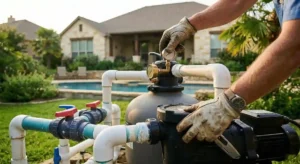
When to stop diying and pick up the phone
Honestly, most homeowners can manage weekly skimming, testing, and basic chemical adjustments on their own. But there are moments when calling a professional isn’t just helpful, it’s the move that saves you money.
If your water turns green and stays green after shock treatment, something deeper is going on. If your pump makes new noises or loses suction, don’t keep running it and hoping it self-corrects. If your water is perpetually cloudy despite seemingly correct chemistry readings, there’s likely a circulation or filtration issue that needs a trained eye and real diagnostic tools.
A regular professional service also removes the guesswork entirely, especially valuable during that first summer when everything is still new. Someone who knows San Antonio’s hard water quirks, the specific dust patterns in Bexar County, and the common equipment in local homes brings something no tutorial can: real, local, hands-on experience.
If you want to go deeper on what a consistent routine actually looks like week by week, our article on weekly pool maintenance in San Antonio Texas covers exactly why staying ahead of the curve is the single most effective thing you can do for your pool, and your wallet.
Your first season doesn’t have to be stressful. With the right habits, the right information, and a little patience, that pool becomes exactly what it was meant to be: your personal escape from the Texas heat.
FAQ
1. What should a new pool owner do first in San Antonio TX?
Start by testing your water chemistry before adding any chemicals. San Antonio’s famously hard water means calcium and pH levels are often already elevated from day one. Check chlorine, pH, alkalinity, and calcium hardness, then adjust from there. Run your pump a minimum of 8 hours daily and establish a weekly cleaning routine right away. If you’re unsure where to begin, a local pool maintenance professional in Bexar County can run a full baseline assessment and set everything up correctly from the start.
2. How often should a first-time pool owner test their water?
During summer, test at least once a week, twice if you use your pool heavily or after a heavy rainstorm. San Antonio’s intense UV exposure burns through chlorine faster than in cooler climates, so regular testing isn’t optional here. Use test strips for quick weekly checks and a liquid test kit when you need precise readings before adjusting chemicals. Keeping a simple log of your weekly results is one of the best first-time pool owner tips anyone can give you.
3. What does a pool care checklist Texas homeowner should follow every week?
Your weekly pool care checklist Texas should cover: skimming the surface, brushing walls and floor, emptying skimmer and pump baskets, testing and adjusting water chemistry, and running your pump at least 8 hours. This routine takes roughly 30–45 minutes per week and is the foundation of every pool maintenance basics San Antonio professionals recommend. Skip it consistently and you’ll be looking at algae blooms, cloudy water, and expensive repairs before the season ends.
4. Why does pool water turn green so fast in the Texas summer?
The combination of heat, UV exposure, and phosphates from rain or dust creates perfect conditions for algae growth, and San Antonio gets all three in abundance. Green water typically means chlorine has dropped too low or stabilizer (CYA) levels aren’t protecting it from the sun. Shock the pool, brush all surfaces, run the filter continuously, and retest after 24 hours. If the water stays green, call a professional, at that point there’s likely an underlying chemistry or circulation issue to address.
5. Is weekly professional pool service worth it for new pool owners in San Antonio?
Absolutely, especially during your first year. Professional pool service in San Antonio removes the guesswork while you’re still learning your pool’s specific needs. San Antonio’s hard water, high heat, and long swim season create conditions that even experienced owners find challenging. A weekly service protects your equipment, keeps your water balanced, and catches small issues before they become expensive repairs. Think of it less as an expense and more as protecting a significant investment in your home.

2 Responses