Your pool’s filtration system works quietly in the background, but it plays a critical role in keeping your water clean, clear, and safe. Two of its most important components (the skimmer and the filter) are often overlooked until problems appear.
Proper skimmer and filter cleaning not only improves water clarity but also protects your pump, reduces chemical demand, and extends the life of your equipment.
Why skimmer and filter cleaning matter
The skimmer is your pool’s first line of defense. It captures leaves, debris, insects, and surface contaminants before they sink and decay. The filter then removes fine particles that cloud the water and strain the circulation system.
When either component becomes clogged, several issues can occur:
- Reduced water circulation
- Increased pump strain
- Higher energy consumption
- Cloudy or unbalanced water
- Premature equipment wear
According to the Association of Pool & Spa Professionals (APSP), proper filtration and routine cleaning are essential to maintaining safe recreational water and protecting mechanical systems from unnecessary stress.
How to properly clean your pool skimmer
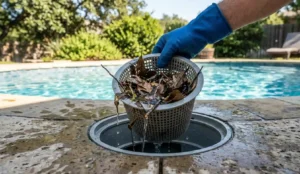
1. Empty the skimmer basket regularly
During peak swim season, check and empty the basket at least 1–2 times per week.
Steps:
- Turn off the pump.
- Remove the skimmer lid.
- Lift out the basket.
- Dispose of debris.
- Rinse thoroughly with a hose.
- Replace securely before restarting the pump.
Neglecting this simple task can restrict water flow and cause pump overheating.
2. Inspect the skimmer weir door
The weir door (the small flap inside the skimmer opening) helps trap debris. Ensure it moves freely and isn’t stuck or broken. A damaged weir reduces surface skimming efficiency.
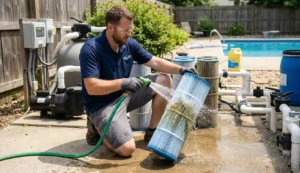
How to clean your pool filter effectively
The cleaning method depends on the filter type:
Cartridge filters
- Turn off the pump.
- Remove the cartridge.
- Rinse with a high-pressure hose.
- Soak in filter cleaner solution if oils or scale are present.
- Reinstall once fully dry.
Recommended cleaning frequency: every 4–6 weeks during heavy use.
Sand filters
- Backwash when pressure rises 8–10 PSI above normal.
- Perform deep sand replacement every 3–5 years.
DE (Diatomaceous earth) filters
- Backwash regularly.
- Add fresh DE powder after cleaning.
- Inspect grids annually for tears.
Signs your skimmer or filter needs immediate attention
- Persistent cloudy water
- Weak return jets
- Pump running louder than usual
- Rapid pressure increase
- Visible debris returning to the pool
According to the National Swimming Pool Foundation, inadequate filtration is one of the leading causes of poor water clarity and increased sanitizer demand in residential pools.
How professional maintenance extends equipment life
While basic cleaning can be handled by homeowners, professional maintenance provides:
- Thorough system inspection
- Pressure calibration checks
- Seal and o-ring evaluation
- Early detection of cracks or housing damage
- Proper chemical balance adjustments
Routine professional servicing reduces long-term repair costs and ensures the filtration system operates at peak efficiency.
Cost comparison example
Preventive cleaning:
- Regular skimmer & filter service: minimal routine cost
Reactive repair:
- Pump replacement due to restricted flow: $1,000–$1,800
- Filter housing crack replacement: $1,200+
Consistent cleaning protects the most expensive components in your system.
Skimmer and filter cleaning may seem like small maintenance tasks, but they are essential to the overall health of your pool. Clean baskets and properly maintained filters improve circulation, reduce chemical use, protect your pump, and extend the lifespan of your equipment.
Staying proactive prevents unnecessary repairs and keeps your water consistently clear and safe.
For a deeper understanding of how water balance works together with proper filtration, we recommend reading our Ultimate Guide to Pool Chemical Balancing for Crystal Clear Water. Combining balanced chemistry with effective filtration is the key to long-term pool performance.
