
Algae growth is one of the most common and frustrating issues pool owners face. Not only does it make the water cloudy and unappealing, but it can also damage surfaces, clog filters, and create slippery hazards. Understanding the types of algae, their causes, and effective removal techniques is key to maintaining a safe, sparkling pool.
In this guide, we’ll walk you through a professional, step-by-step approach to algae removal in your pool, going beyond chemicals to include mechanical cleaning, circulation management, and long-term prevention.
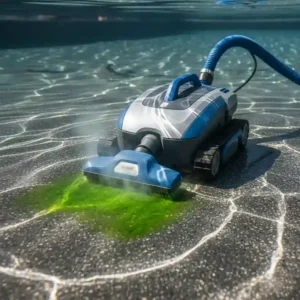 Understanding algae types
There are several types of algae that commonly infest residential pools:
- Green Algae – The most common type, usually visible throughout the pool as a thin, cloudy film. Thrives in warm water with poor circulation.
- Yellow or Mustard Algae – Found in shaded areas, often on walls or steps. Resistant to chlorine and harder to remove.
- Black Algae – Typically appears on plaster surfaces and tile grout. Its tough roots make it extremely difficult to eliminate.
Identifying the type of algae is the first step in proper removal.
Causes of Algae Growth
Algae growth is rarely a random occurrence. Common causes include:
- Improper pool chemical balancing, especially low chlorine or pH imbalance
- Poor water circulation or clogged filters
- Debris accumulation on pool surfaces
- Extended periods of heavy sun exposure or rain
- Stagnant water in corners, steps, or shallow areas
According to Water Quality & Health Council, “Algae in pools is primarily caused by nutrient-rich water and insufficient sanitation. Early intervention prevents the problem from escalating”
Step-by-Step algae removal in your pool
1. Test and adjust chemicals
Even though algae removal is not only about chemicals, correct chemical balancing is essential. Shock the pool if chlorine is too low, and adjust pH between 7.2–7.8. This creates an environment where algae cannot thrive.
2. Brush all surfaces
Use a stiff pool brush to scrub walls, steps, and corners. Focus on areas where algae attaches, such as tile lines or shaded spots. Mechanical removal reduces algae before chemicals finish the job.
3. Vacuum and skim
Vacuum loose algae from the bottom of the pool and remove floating debris with a skimmer. This prevents algae spores from circulating and settling back into the water.
4. Run the filtration system
Run your pump continuously for at least 24–48 hours after shocking. Clean or backwash your filter regularly to remove dislodged algae and avoid clogging.
5. Monitor and repeat if necessary
Some stubborn algae, like mustard or black algae, may require repeated treatment. Monitor water clarity and chemical levels daily until the pool is fully clear.
Prevention tips
Preventing algae is always easier than removing it:
- Maintain proper weekly pool maintenance
- Test and balance chemicals regularly
- Brush and vacuum surfaces weekly
- Keep filters and skimmer baskets clean
- Use UV covers or keep debris out of the water during storms
Professional pool services combine these steps to ensure a long-term clean, clear pool while minimizing chemical usage.
Expert advice and best practices
Mechanical cleaning is key
According to The Spruce, a leading home improvement resource:
“Manual scrubbing and vacuuming are as important as chemical treatment for algae removal. Neglecting physical cleaning allows algae spores to remain and recolonize”
— The Spruce, Pool Care Guide
This highlights why professional methods focus on a combination of chemical, mechanical, and filtration techniques rather than relying solely on shock treatments.
Long-Term monitoring
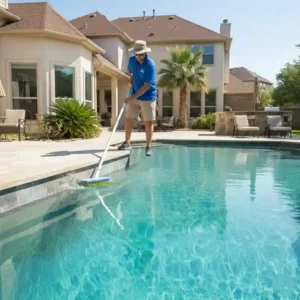 Keeping a consistent schedule and observing early signs of algae growth is essential. Cloudy water, greenish tint, or slippery surfaces are indicators that algae may be returning. Preventative action avoids costly deep cleans or equipment strain.
Algae in your pool can quickly turn a relaxing oasis into a cloudy, slippery, and unhealthy environment. By understanding the types of algae, their causes, and applying a step-by-step professional approach (including chemical balancing, brushing, vacuuming, and filtration) you can restore clear, safe water efficiently.
Prevention is just as important as removal. Consistent weekly pool maintenance, proper chemical levels, and attentive monitoring keep algae from coming back and protect your pool equipment from unnecessary strain.
For more tips on keeping your pool sparkling all year, be sure to check out our Ultimate Guide to Pool Chemical Balancing for Crystal Clear Water. Understanding how proper water chemistry complements mechanical cleaning will help you maintain a beautiful, healthy pool with minimal stress.
Frequently asked questions
1. What causes algae to grow in my pool?
Algae thrives when chlorine is low, pH is unbalanced, or water circulation is poor. Debris and sunlight also contribute.
2. Can I remove algae using only chemicals?
While chemicals like chlorine are essential, mechanical brushing, vacuuming, and filtration are also required for effective removal.
3. How long does it take to remove algae?
Depending on the type and severity, algae removal in your pool can take 1–3 days with proper shock treatment, brushing, vacuuming, and filtration.
4. How can I prevent algae from returning?
Maintain proper chemical levels, brush and vacuum weekly, clean filters, and monitor water clarity to prevent recurrence.
5. Do professional pool services use different methods than DIY?
Yes. Professionals combine chemical treatments, mechanical cleaning, and filtration optimization to remove algae efficiently and reduce chemical usage.
