
When you’re shopping for the best pool cover Hondo TX, you’re really choosing how your backyard will feel from March to December quieter nights, fewer leaves to chase, warmer water, and lower bills. The right cover changes the sound of the pool itself: less splash evaporating into dry Hill Country air, more calm ripples that hold their heat after sunset. In Hondo, where wind can scoot mesquite leaves across the deck and summer sun drinks water like sweet tea, choosing wisely matters.
Let’s set the scene. Late afternoon, sky the color of a ripe peach, the surface of the pool flickering like foil. You tug a solar cover across the water and hear that soft, bubbly rustle; fifteen minutes later, the cover’s doing quiet science trapping warmth, slowing evaporation, and protecting chlorine from UV bite. Different cover, different mood: a taut safety cover feels like a drum secure, serious, strong enough to stop pets and curious toddlers from slipping in when you’re not looking. And then the smooth flourish of an automatic cover, the one-button slide you’ll actually use every day because it’s easy.
So, which one earns the badge of best pool cover Hondo TX for your household? It depends on your priorities: water saved, heat kept, safety locked, or pure convenience. In our climate, every option helps evaporation and debris control, but each type shines in its own lane.
Before we get practical, two quick, helpful references if you like neutral benchmarks: ENERGY STAR guidance on pool efficiency for heating/retention basics, and SAWS drought updates for local stage restrictions. Skimming those pages gives context for why covers aren’t just nice-to-have accessories they’re conservation tools.
 Why the best pool cover Hondo TX is a climate decision
Our dry spells magnify evaporation. On a windy, 100°F week, an uncovered pool can lose staggering gallons. A solar cover acts like a greenhouse blanket water stays, heat stays, chlorine rests. A safety cover cuts loss, too, but its mission is protection first: anchored straps, solid tension, peace of mind. An automatic cover is a daily habit maker: if closing the pool takes five seconds, you’ll do it after every swim, which means water and heat stay put every night.
You’ll notice the difference within days. With a cover, the air above the water smells less “chlorine-y” at dusk because sanitizer isn’t racing to replace what UV just burned. The surface looks calmer, less busy with little rings of lost water. The first electric or gas bill of the season? That’s where the story shows up in numbers.
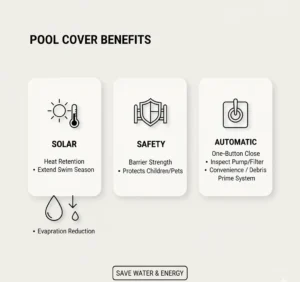
Quick comparison pick by goal
- Solar cover: Best for heat retention and evaporation control on a budget. Lightweight, bubble-textured sheets you roll on/off. Warms water, reduces chemical loss, asks for light care.
- Safety cover: Best for barrier protection plus debris control. Tight mesh or solid panels anchored to the deck prevent entry; great for off-season or homes with kids/pets. Cuts evaporation, too.
- Automatic cover: Best for daily convenience and four-season performance. Tracks along rails, opens/closes with a switch. Excellent evaporation control, good heat retention, premium price and upkeep.
How to crown the best pool cover Hondo TX for your family
Start with your non-negotiable. If your top priority is safety because you’ve got a toddler who thinks water is a magnet, a safety cover is the conversation. Feel the straps, the anchors set into the deck, the drum tight surface you can literally tap. In day to day use, you’ll love how it also blocks most debris, which means less Saturday skimming. In Hondo winds, a properly tensioned safety cover barely flutters; it just sits and guards.
If your household lives for late-night swims and shoulder-season warmth, the solar cover is the lightest lift with a real payoff. The water holds a softer temperature overnight; morning laps pinch less. You’ll still need a reel to make it easy, and you’ll replace the sheet every few seasons as bubbles age. But the way a solar cover blunts evaporation you can see it in the stillness at noon is hard to beat per dollar.
If you want the best of all worlds, convenience wins. An automatic cover turns closing the pool into a habit as simple as flipping a switch. That means day-to-day evaporation drops dramatically because “I’ll cover it tomorrow” turns into “I covered it now.” You’ll pay more up front and maintain the mechanism (clean tracks, check the motor, watch the fabric tension), but nothing competes with the daily ease of use.
Cost isn’t just purchase price; it’s also the discipline a cover saves you. A covered pool loses less heat and chemistry, so you run the pump and heater more efficiently, top up water less often, and spend fewer evenings “rescuing” sanitizer after UV bite. In dry summers, that’s a real, felt difference: fewer chemical runs, lower make-up water, a calmer weekly routine.
Care that keeps any cover happy
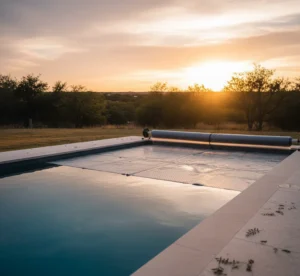
All three covers share a few simple rhythms. Rinse dust and pollen off the material; grit is sandpaper. Keep edges aligned so wind doesn’t tug and wrinkle. If you choose an automatic cover, treat the tracks like you treat bike chains: clean and dry beats “I’ll get to it later.” With safety covers, tension is everything snug straps keep panels flat and stop debris from sagging into the water. With a solar cover, a reel makes you a daily user instead of a “some-weekends” user, and daily use is what gets you the crown of best pool cover Hondo TX at your address.
One sensory test I like: stand by the water ten minutes after closing the cover at dusk. Listen. With the pool sealed, the little whisper of evaporation you don’t usually notice goes quiet. In that hush, you can almost feel tomorrow’s water still there.
Choosing with confidence
Okay decision time. If you crave the least friction and the strongest routine, the automatic system will earn its keep. If your budget is tighter and warmth matters, the solar cover gives you the best temperature to dollar ratio while still punching evaporation in the nose. If safety and a clean off-season are non-negotiable, the safety cover is the anchor literally.
Whichever route you take, set yourself up on day one. Label where the reel parks. Mark strap tension you like. Create a “closing ritual” at sunset: cover on, skimmer baskets empty, a quick glance at the pad. These small habits multiply the benefit you bought. And if drought restrictions tighten again, you’ll already be ahead; a covered pool is simply easier on the aquifer.
A final Hondo-specific thought: wind. Our breezes can turn afternoons into leaf parades. Covers don’t just save water; they save your mood. Fewer leaves in the basin means your filter stays cleaner, your pump runs happier, and your Saturday feels less like a shift. That intangible ease is why so many homeowners, after using one for a month, say, “Should’ve done this years ago.”
If you want to go deeper on saving water and protecting chemistry two things covers supercharge check out our guide Pool Water Conservation San Antonio. Pairing a cover with smarter run-times and gentle chemistry tweaks is how you stretch each gallon and each dose through a long Texas summer.
FAQs
-
Which cover saves the most water in Hondo?
An automatic cover usually wins because you’ll close the pool daily. A solar cover also cuts evaporation significantly at the lowest cost.
-
Is a safety cover worth it if I don’t close for winter?
Yes. A safety cover provides a secure barrier year-round and keeps debris out during windy stretches, while still reducing evaporation.
-
Will a solar cover make my pool too warm?
In peak heat, it can. Roll the solar cover off during hot afternoons and use it evenings/mornings to balance comfort with energy savings.
-
What maintenance does an automatic cover need?
Keep tracks clean, check fabric tension, clear debris, and schedule an annual inspection. These small tasks preserve daily convenience and extend life.
-
How do I size a cover correctly?
Measure inside dimensions, note step/bench shapes, and follow manufacturer fit guides. A snug fit is key to performance especially for safety cover anchors and evaporation control.
