
There’s a moment every pool owner in Hondo eventually faces. You’re walking along the edge of the pool, running your hand along the wall, and something feels off, rougher than it used to be, maybe a little chalky, or you notice a crack that wasn’t there last season. You tell yourself it’s probably fine. It’s probably just cosmetic. And sometimes, honestly, it is. But other times, what looks like a surface issue is actually your pool telling you something important, and in the Hondo, TX climate, where summer heat and hard water work against pool surfaces more aggressively than most homeowners realize, knowing how to read those signs can save you thousands of dollars in the long run. Understanding pool resurfacing in Hondo TX starts with knowing what to look for before a minor issue becomes a major repair.
What pool resurfacing actually is, and why Hondo pools need it sooner
The basics: What’s actually on the surface of your pool
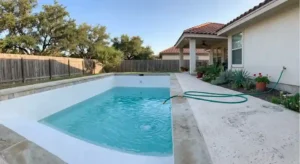
Most residential pools in Hondo and across Medina County are concrete pools finished with plaster, that smooth, slightly chalky white or colored coating you see when you look at the walls and floor of your pool. Plaster is what makes a concrete pool watertight, protects the structural shell underneath, and gives the water that clean, appealing look. It’s not decorative. It’s functional.
The problem is that plaster has a finite lifespan. Under ideal conditions (consistent water chemistry, moderate climate, regular maintenance) a standard plaster finish lasts about 10 years. But in Hondo, conditions are rarely ideal in the way that number assumes. The combination of extreme summer heat, intense UV exposure, and the hard, mineral-rich water that runs throughout the region creates an environment that ages pool plaster faster than the national average suggests.
According to Bob Vila’s pool resurfacing guide, the signs that a pool needs resurfacing include worn spots, rough surface texture, plaster flaking or peeling, persistent staining, and visible cracks, all of which tend to appear earlier in high-heat, hard-water environments than in softer climates. For Hondo pool owners, that 10-year benchmark often becomes 7 to 8 years in practice, sometimes less if the water chemistry hasn’t been consistently managed.
Why hard water in Hondo accelerates surface deterioration
Here’s something specific to this part of Texas that most generic pool care guides don’t address: the water in Hondo is very hard. Like most of the region west of San Antonio, local water carries a high mineral content (calcium, magnesium, and carbonates) that affects pool surfaces in a direct and ongoing way.
When pool water becomes chemically imbalanced (which happens faster in hard water environments) it can turn corrosive. Water with low pH and low calcium hardness is what chemists call “aggressive water,” and it literally eats at your plaster surface over time, leaching calcium out of the finish and leaving it porous, rough, and discolored. You might be doing everything right with your chlorine and still be slowly damaging your pool’s surface if your calcium hardness and pH aren’t being actively managed together.
This is one of the reasons pool plaster repair Texas professionals consistently see more frequent resurfacing needs in the western Hill Country region than in comparable pools elsewhere, and why staying on top of water chemistry isn’t just about water clarity. It’s about protecting the physical structure of your pool surface.
The 7 warning signs that tell you it’s time
Knowing the signs of pool resurfacing in Hondo TX situations saves you from either acting too early (unnecessary expense) or waiting too long (structural damage that complicates the job significantly). Here’s what to look for:
- Rough texture on walls or floor: If the surface feels like sandpaper against your feet or hands, the plaster has deteriorated beyond what brushing can address. This is one of the most reliable early indicators.
- Visible plaster flaking or peeling: Small chips or flakes appearing in the water or collecting in your filter are plaster breaking down. This stage requires attention, it won’t resolve on its own.
- Persistent staining that doesn’t respond to treatment: When stains have penetrated into the plaster structure rather than sitting on the surface, no amount of chemical treatment or brushing removes them completely. Resurfacing is the only real fix.
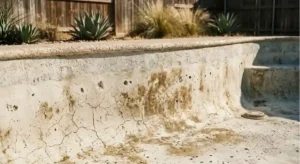
- Visible cracks in the surface: Hairline cracks in plaster are normal over time. Cracks that run deeper, widen over seasons, or appear in multiple locations need professional evaluation, some indicate surface-only issues, others suggest structural problems that need addressing before resurfacing.
- Discoloration across large areas: If significant portions of your pool floor or walls have turned gray, brownish, or uneven in color despite balanced chemistry, the plaster is at the end of its serviceable life.
- Chalky, white powder coating: Running your hand along the wall and finding a chalky residue is a sign of plaster “dusting”, calcium leaching out of the surface as the finish breaks down.
- Persistent water loss beyond normal evaporation: While not always caused by surface issues, water loss combined with other signs above can indicate plaster porosity allowing water to seep through to the shell.
As Angi’s pool resurfacing cost guide notes, “a good plaster finish should last between five and ten years, how well you maintain the correct chemical balance of the water impacts the lifespan of your pool’s finish significantly.” That statement hits especially close to home for pool refinishing Hondo situations, where water chemistry management is both more challenging and more consequential than in softer water regions.
Your resurfacing options, and when to repair vs. refinish
Patch and repair vs. full resurfacing: Making the right call
This is the decision most homeowners struggle with, and it’s worth thinking through clearly before committing to either path. Small, isolated damage (a single crack, a limited rough patch in one area, a localized stain) can often be addressed with targeted repairs rather than full resurfacing. Patching is less expensive and less disruptive, and when done correctly on a pool that’s otherwise in good condition, it extends serviceable life meaningfully.
The calculus changes when damage is widespread. If rough texture appears across most of the pool floor, if multiple cracks are present, if staining covers significant surface area, or if plaster flaking is occurring in several locations simultaneously, patching becomes a game of whack-a-mole. You fix one area and another develops, because the underlying issue is the overall age and condition of the finish rather than isolated damage points.
This Old House’s pool resurfacing guide makes this point directly: “Cracks invariably appear, they can be caused by a chemical imbalance or by UV rays, or even by slight shifts in the soil beneath the pool. The veneer may start to peel. In turn, the cracks collect dirt and algae.” That progression describes exactly what happens when pool plaster repair Texas situations go from isolated to systemic, and why catching them early makes such a significant cost difference.
What are your resurfacing finish options?
When it does come time for a full resurfacing, you have more choices than just standard white plaster. Here’s a practical overview of what’s available and what each means for a Hondo pool:
Standard white plaster is the most affordable option, typically running $4–$6 per square foot. It’s what most older pools in the region have, and it’s a perfectly functional choice. The tradeoff is that it’s the least stain-resistant option and tends to require resurfacing again in 7–10 years under typical Hondo conditions.
Quartz aggregate finishes blend crushed quartz with cement for a harder, more stain-resistant surface that handles hard water conditions better than standard plaster. Cost runs $5–$9 per square foot, and lifespan extends to 12–15 years with proper maintenance. For Hondo pools dealing with ongoing hard water chemistry challenges, the upgrade often pays for itself over time.
Pebble finishes (PebbleTec, PebbleSheen) are the most durable option, with lifespans of 20+ years and excellent resistance to staining and chemical damage. Cost runs $10–$18 per square foot installed. The investment is higher upfront, but for a pool that’s going to be heavily used through long Texas summers for decades, many homeowners find the math works in their favor.
Pool paint is the lowest-cost entry point but the shortest-lived — typically 2–5 years before reapplication is needed, even with the best epoxy formulations. It’s a reasonable option for managing costs in the short term but rarely the most economical choice over a 10–15 year horizon.
What the process actually looks like, and how long you’re without your pool
For pool resurfacing in Hondo TX, the actual process follows a consistent sequence regardless of the finish chosen. The pool is drained completely. Old plaster is chipped or ground down to the concrete shell (or cleaned and prepared in the case of paint). Any structural cracks or damage to the shell itself are repaired before new surface material is applied. The new finish goes on, and then (this is the part most homeowners don’t fully anticipate) the pool needs a careful startup process as it fills and the new surface cures.
That startup period matters more than many people realize. New plaster, in particular, requires specific chemistry management during the first 28 days to cure correctly and achieve its full hardness and durability. Water that’s too aggressive (low calcium, low pH) during curing can permanently compromise the finish before you’ve even had a season to use it. A professional who knows pool plaster repair Texas startup procedures will walk you through this, it’s not complicated, but it does require attention during that initial period.
Total time from drain to swim-ready is typically 1–2 weeks for standard plaster, slightly longer for aggregate finishes. Plan around that timeline when scheduling, ideally in fall or early spring when you’re not in the heart of swim season.
If you’ve been managing ongoing chemistry challenges that may have contributed to your pool’s surface deterioration, our article on hard water and pool chemical balancing in San Antonio covers the regional water conditions that affect pools throughout South Texas (including Hondo and Medina County) and what you can do to protect your newly resurfaced pool from the same cycle repeating.
FAQ
1. How do I know if my pool in Hondo TX needs resurfacing or just repairs?
The key distinction is whether the damage is isolated or widespread. A single crack or a limited rough patch in one area can often be addressed with targeted pool plaster repair. But if rough texture appears across most of the pool surface, if plaster is flaking in multiple locations, or if persistent staining covers significant areas despite chemical treatment, patching becomes a temporary fix rather than a real solution. A professional assessment will tell you definitively which situation you’re facing and whether repair or full pool resurfacing in Hondo TX is the more economical path forward.
2. How long does pool plaster last in Hondo and South Texas?
Under ideal conditions, standard pool plaster lasts about 10 years. In Hondo and the surrounding region, the combination of extreme summer heat, intense UV exposure, and hard mineral-rich water typically shortens that lifespan to 7–8 years, sometimes less if water chemistry hasn’t been consistently managed. Hard water that’s improperly balanced can turn corrosive and actively leach calcium from plaster surfaces over time. Choosing a more durable finish like quartz aggregate at your next resurfacing, and maintaining proper water chemistry year-round, helps extend the life of your new surface significantly.
3. What does pool resurfacing cost in Texas in 2026?
Pool resurfacing costs in Texas vary based on pool size and finish type. Standard white plaster runs approximately $4–$6 per square foot installed. Quartz aggregate finishes range from $5–$9 per square foot with better durability and stain resistance. Pebble finishes (the most durable option) run $10–$18 per square foot but carry lifespans of 20+ years. For a standard 400–500 square foot pool surface, total costs typically range from $2,500 for basic plaster to $8,000–$9,000 for premium aggregate finishes. Getting multiple quotes from licensed pool resurfacing contractors in the Hondo and San Antonio area is always recommended.
4. Can I swim in my pool during the resurfacing process?
No, pool resurfacing requires completely draining the pool, which means no swimming during the process. The work itself typically takes several days to a week depending on the finish chosen. After the pool is refilled, new plaster surfaces require a careful 28-day startup period where water chemistry is specifically managed to allow the finish to cure correctly. Swimming is generally possible within a few days of refilling, but the startup chemistry protocol must be followed consistently during that first month to protect the new surface. Your pool resurfacing contractor should walk you through this process before leaving the job.
5. What’s the best time of year to resurface a pool in Hondo TX?
Fall and early spring are the ideal windows for pool refinishing in Hondo, specifically October through November and March through April. These months offer more moderate temperatures that allow new plaster or aggregate finishes to cure at an appropriate rate, avoid peak swim season disruption, and typically come with better contractor availability and scheduling flexibility than summer months. Resurfacing during the height of summer in South Texas is possible but creates challenges both for the curing process and for being without your pool during the most-used months of the year.
