
If you’ve ever climbed out of your pool with red, stinging eyes or itchy skin that just won’t quit, you already know the frustration. And if your first instinct was to blame too much chlorine, well, you’re not alone, but you’re also not quite right. Understanding why pool water irritates eyes and skin in San Antonio starts with busting one of the most common myths in backyard pool care, and once you get it, everything else starts to make a lot more sense.
San Antonio’s climate adds its own layer of complexity here. The intense heat, long swim seasons, and notoriously hard water create conditions that accelerate chemical imbalances faster than in most parts of the country. So let’s get into the real science (in plain English, no lab coat required).
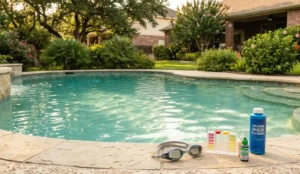
It’s not the chlorine — It’s what happens to it
The real culprit: Chloramine buildup pool owners often miss
Here’s something that surprises almost every pool owner the first time they hear it: that sharp, chemical smell coming off your pool? That’s not chlorine working. That’s chlorine failing. When chlorine combines with organic contaminants (sweat, sunscreen, body oils, urine, yes that too) it forms compounds called chloramines. And chloramines are the real reason your eyes burn, your skin itches, and your sinuses feel like you swam through a chemical plant.
Ironically, a strong chemical smell often means your pool doesn’t have enough free chlorine to do its job properly. The CDC Healthy Swimming program confirms this directly, noting that a well-maintained pool should have little to no chemical odor, that familiar harsh smell is actually a sign that chloramines have built up to uncomfortable levels and the water needs attention.
Chloramine buildup pool issues are especially common in San Antonio during peak summer months. Why? Because more swimmers mean more organic contaminants entering the water, and the heat accelerates the reaction between chlorine and those contaminants. A pool that’s perfectly balanced on Monday morning can be loaded with chloramines by Saturday afternoon after a week of heavy use.
What pool chemical balance actually means
This is where pool chemical balance becomes your best friend, or your worst enemy if you ignore it. Proper balance isn’t just about dumping chlorine in and calling it a day. It means maintaining the right relationship between several chemical parameters simultaneously:
- Free Chlorine (FC): The active, working chlorine available to sanitize. This is what you want high. Target: 1–3 ppm.
- Combined Chlorine (CC): The chloramines, already “used up” chlorine that’s now causing irritation. You want this as close to zero as possible.
- pH: When pH drifts above 7.8, chlorine becomes dramatically less effective even if levels look fine on paper. Target: 7.2–7.6.
- Total Alkalinity: Keeps pH stable. Without it, your pH bounces around daily. Target: 80–120 ppm.
- Cyanuric Acid: Protects chlorine from San Antonio’s UV rays. Too little and chlorine vanishes within hours; too much and it becomes ineffective. Target: 30–50 ppm.
As the Pool & Hot Tub Alliance emphasizes in their water quality guidelines, pH imbalance is one of the most overlooked contributors to swimmer discomfort — more so than chlorine levels themselves. A pool with perfect chlorine but high pH will still leave your eyes red and your skin feeling stripped.
San Antonio’s hard water problem makes everything harder
Here’s the local wrinkle that most generic pool guides won’t tell you: San Antonio sits in one of the hardest water zones in the entire country. The water coming out of your tap is already loaded with calcium and minerals before it even hits your pool. Over time, that hard water throws off your pool chemical balance in ways that require more frequent adjustments than pools in softer water regions.
High calcium hardness doesn’t just leave white crusty deposits on your tile, it also makes your water feel rough and slightly abrasive against skin, which many homeowners misinterpret as a chemical irritation problem. When I’ve visited pools in Helotes or Converse where the owner swore their chemistry was fine, the culprit was often calcium hardness creeping up past 500 ppm without anyone noticing.
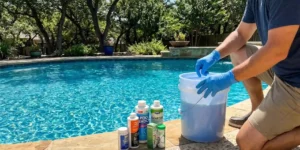
How to fix it and keep It fixed
How to eliminate chloramine buildup for good
The fix for chloramine buildup pool problems is called breakpoint chlorination — or in simpler terms, shocking your pool. This means adding a concentrated dose of chlorine (typically 10x the current combined chlorine level) to chemically destroy the chloramines and restore your free chlorine to effective levels.
For safe pool water Texas conditions during summer, plan to shock your pool:
- After every large gathering or pool party
- After heavy rainfall
- When you notice that sharp chemical smell returning
- Any time your water looks hazy or slightly off-color
- At least once every two weeks during peak season as routine maintenance
Use a non-chlorine shock (potassium monopersulfate) if you want swimmers back in the water within an hour. Use calcium hypochlorite shock for heavier situations, just wait at least 8 hours before swimming and retest before anyone gets in.
According to Bob Vila’s pool maintenance guide, shocking is “one of the most underutilized tools in a pool owner’s maintenance routine”, most homeowners only reach for it when something is visibly wrong, when it’s far more effective as a preventive measure done consistently throughout the season.
Simple steps for safe pool water Texas homeowners can follow weekly
Keeping safe pool water Texas conditions year-round doesn’t require a chemistry degree. It requires consistency. Here’s a practical weekly approach that addresses both irritation prevention and overall water quality:
- Test free chlorine and pH every 5–7 days minimum, twice a week during heavy use periods
- Keep pH between 7.2 and 7.4 (lean toward the lower end in summer for better chlorine efficiency)
- Check your combined chlorine reading, if it’s above 0.5 ppm, shock the pool that evening
- Brush walls and floor twice weekly to prevent biofilm buildup along surfaces
- Clean your filter regularly, a dirty filter recirculates contaminants instead of removing them
- Encourage swimmers to rinse off before entering, it reduces the organic load dramatically and directly reduces chloramine buildup pool formation
That last one sounds simple, almost too simple. But a quick 30-second rinse before swimming reduces the contaminants entering the water by a surprising amount. It’s the kind of habit that genuinely makes a difference over the course of a summer.
When home testing isn’t enough
Test strips give you a solid weekly snapshot, but they have limits. They can miss subtle shifts in combined chlorine, and they’re less accurate at detecting the specific imbalances that cause skin and eye irritation. If you’ve been shocking regularly, your chemistry readings look fine on paper, and people are still complaining about red eyes or itchy skin after swimming, it’s time for a professional water analysis.
A trained pool technician can run a full panel that goes beyond what home kits measure, identifying issues with stabilizer levels, phosphate contamination, or total dissolved solids that gradually compromise your pool chemical balance without showing up on a basic strip test. San Antonio’s hard water and heavy summer use create exactly the conditions where those deeper issues tend to hide.
And here’s the honest truth: maintaining truly safe pool water Texas conditions through a full San Antonio summer, with the heat, the dust, the hard water, and the heavy use, is genuinely more demanding than in most climates. Having a professional set of eyes on your water regularly isn’t a luxury. It’s smart ownership.
If you want to understand how the Texas sun specifically affects your chlorine and pH levels beyond just the chemistry basics, our article on Pool Chemical Balancing San Antonio goes deep on exactly that, and it’s worth the read before your next swim day.
FAQ
1. Why do my eyes burn after swimming in my pool in San Antonio?
Burning eyes after swimming are almost always caused by chloramines, not excess chlorine. Chloramines form when chlorine reacts with sweat, sunscreen, and other organic matter in the water. They irritate eyes, skin, and respiratory passages. The fix is shocking your pool to break down those compounds and restore free chlorine levels. In San Antonio’s heat and heavy swim season, this happens faster than in cooler climates, so regular shocking is essential for safe pool water Texas conditions.
2. What is chloramine buildup and how do I get rid of it?
Chloramine buildup happens when your pool’s free chlorine gets “used up” reacting with organic contaminants instead of sanitizing the water. The result is combined chlorine, irritating, smelly, and ineffective. To eliminate it, shock your pool with a concentrated chlorine dose (breakpoint chlorination). For routine prevention, shock after every heavy use period, after rain, and at least every two weeks during summer. Keeping pool chemical balance tight week to week is the best long-term defense.
3. Can high pH cause eye irritation in a pool?
Absolutely, and this surprises most people. When pH rises above 7.8, chlorine loses up to 80% of its sanitizing power, which allows irritants to accumulate even if your chlorine reading looks fine. High pH also makes water feel harsh against eyes and skin. Maintaining pool chemical balance with pH between 7.2 and 7.6 is one of the most effective things you can do to prevent irritation, and it’s often more impactful than adjusting chlorine levels alone.
4. How does San Antonio’s hard water affect pool water quality?
San Antonio has some of the hardest tap water in the country, naturally high in calcium and minerals. This pushes calcium hardness in pools above recommended levels over time, which can make water feel abrasive on skin and eyes, symptoms often mistaken for a chlorine problem. Hard water also makes pool chemical balance harder to maintain, requiring more frequent adjustments. Having your water professionally tested at the start of each season helps establish a proper baseline specific to local water conditions.
5. How often should I shock my pool in San Antonio to prevent irritation?
During peak summer season in San Antonio, shock your pool at least every two weeks as routine maintenance, more frequently after large gatherings, heavy rainfall, or any time you notice a chemical smell or hazy water. Consistent shocking prevents chloramine buildup pool issues before they reach the point of causing swimmer discomfort. If irritation persists despite regular shocking and balanced chemistry, schedule a professional water analysis to check for deeper issues like phosphates or elevated total dissolved solids.