
Owning a pool means managing comfort and costs and a variable speed pool pump Hondo TX is one of the rare upgrades that tackles both at once. Picture a July afternoon in Hondo: hot sun humming on the stone deck, water rippling like glass, cicadas working overtime. Your old single speed sounds like a box fan on full blast. Swap that out, and the sound drops to a soft purr while the meter slows down, too. That’s the daily rhythm of energy savings quiet, steady, almost unnoticeable until the bill arrives.
Let’s keep it plain. A single speed is either “on” or “off.” A variable speed pump (VS) lets you choose how hard it works. Most of the day your pool doesn’t need a rush of water; it needs consistent flow. When you dial the motor down, friction drops, electricity drops, and clarity actually improves because the water spends more time in the filter. That’s the win. Those gentler pump settings are the secret sauce behind long term energy savings.
Here’s a quick, human example. My neighbor two kids, one very splashy lab was running a 2 HP single-speed eight hours a day. We installed a VS pump, set a calm “daily” speed for filtration and a short “boost” window for skimming and vacuuming. The pool felt smoother (less turbulence, better circulation) and the electrical use dropped so much that the upgrade began paying for itself immediately. A utility rebate helped with the upfront cost, and the rest came from the lower bill every month.
You don’t need a physics lesson to enjoy the results, but if you like a metaphor: think of a VS pump like cruise control on a hill. You glide instead of flooring it, and the tank lasts. In Hondo heat, this matters more because pumps run longer. Lower RPM equals cooler motors, quieter decks, and extended life on seals and bearings. Fewer frantic cycles also means less stress on filters and heaters. Over a season, that’s comfort and energy savings you can hear (or not hear) and feel.
One last note before we go deeper: the VS category is now the standard for efficiency. If you like to skim official guidance, start with bold ENERGY STAR pool pump basics and bold U.S. DOE pool pump standards. They’re useful as neutral benchmarks—and they explain why a variable speed pool pump Hondo TX upgrade isn’t just trendy; it’s practical.
How a variable speed pool pump Hondo TX actually pays you back
ROI sounds like accounting, but out here it’s just “does this save me more than it costs?” Let’s run a simple sanity check using realistic numbers. Suppose your current single-speed draws around 1.8 kW and runs 8 hours daily in season. At an average local rate, that’s meaningful money each month. A VS unit, filtered at a lower RPM for most of the day, might sip 0.3–0.6 kW during long, quiet cycles and briefly ramp for skimming or vacuuming. Those hours at low RPM create the bulk of the energy savings.
Now the part most people miss: your filter loves slow water. More
contact time means better capture of fines, which means clearer water with fewer clarifiers and fewer “why is it cloudy?” Saturdays. Good pump settings are the reason your pool can look better while the meter spins slower. A decent rebate (many utilities offer them—always worth checking) softens the upfront hit, and quieter operation is a bonus you won’t see on a spreadsheet but you’ll hear every evening.
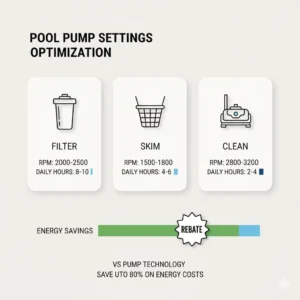
If you prefer a feel-based plan instead of spreadsheets, set your VS pump with three “chapters” in the day. Early morning: low RPM to circulate and keep surface calm. Afternoon: a tasteful bump that improves skimming when breeze and swimmers add debris. Late night: a gentle polish—slow filtration when UV isn’t chewing up chlorine. Those pump settings balance cost and clarity. During party days or after wind, add a short high-RPM window for vacuuming. That’s it. The machine adapts to your life, not the other way around.
Where does maintenance fit in? Lower RPM reduces vibration and heat, which extends motor and seal life. You’ll still do normal care—clean baskets, rinse cartridges—but you’ll notice fewer dramatic pressure swings. Many owners also report fewer “false alarms” that used to sound like failing equipment. A calm pump is a calm pad.
And yes, talk to your utility about a rebate. Some programs cut a tidy chunk off the price if your model is qualified (ENERGY STAR often required). Pair that rebate with energy savings and the ROI horizon moves closer than you think. Most Hondo backyards with medium-size pools see payback in one to three seasons, depending on run-time and rates.
The only list you need: quick setup & ROI moves
- Pick a properly sized VS model (bigger isn’t better; matching flow to your filter/heater matters).
- Create three pump settings: low (filtration all day), medium (afternoon skim), high (cleaning).
- Note pressure at each speed; use that as your new “clean” baseline.
- After storms or parties, run a short high-speed cycle, then return to low for energy savings.
- Save your schedule in the controller—and apply for any rebate the same week you install.
Living with a VS pump: seasons, sound, and small wins
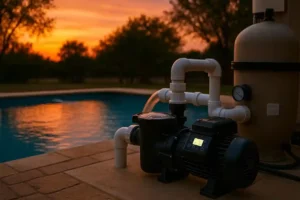 A variable speed pool pump Hondo TX becomes part of the background in the best way. You’ll notice the change first at night: a soft hum instead of that pushy roar. Water slides out of the returns like silk. The deck feels calmer; conversations move closer to the edge. It’s a subtle but real quality-of-life upgrade that rides along with the energy savings.
Seasonally, your schedule shifts a little. In spring and fall, let the low RPM carry more of the day. In peak summer, keep the low speed long but add a modest afternoon bump to help skimming when mesquite leaves and dust stir up. Winter? Split a reduced schedule between morning and evening so you’re not cooking the motor at 3 p.m. heat spikes. All of that is a five minute tweak in the controller the joy of tailored pump settings.
There are pitfalls to avoid. Don’t oversize the pump and then run it fast “just because.” Slow is the point. Also, make sure minimum speeds meet heater and salt cell needs (some devices require a flow threshold). If your cleaner relies on strong suction, reserve a daily or every other day high speed window to give it muscle, then drop back to sipping mode for energy savings. If you’re unsure, peek at the manual or ask a pro to tune the schedule once and jot the numbers inside the panel door.
Water chemistry plays nicer with a calm pump. Longer, slower filtration smooths pH drift, and fine particles settle into the filter instead of pinballing around the basin. You use fewer clarifiers and less “panic shock.” That, too, saves money even though it doesn’t show up under the line item called electricity.
Two small extras round out the experience. First, keep your controller simple: name speeds for their jobs (“Filter,” “Skim,” “Clean”). When a storm hits, you’ll tap the right one without thinking. Second, check eligibility for rebate renewals when you replace other gear; some programs bundle efficiency upgrades and nudge ROI further in your favor. As always, bold ENERGY STAR pool pump basics is a solid neutral reference.
End on a picture. Late afternoon, Hondo light going golden; the pump barely audible; the surface unrolling in slow, even lines. That’s what a VS pump buys: quieter evenings, clearer water, and a bill that’s less bossy. If you want to keep stacking wins, pair this upgrade with our guide on Storm Preparation Pool Hondo TX optimized run-time plus a post-storm routine protects your ROI and keeps the pad drama-free.
FAQs
-
How much can I really save with a VS pump?
Most Hondo pools see meaningful energy savings by running long, low-RPM cycles and short cleaning bursts. Payback often lands within one to three seasons faster with a rebate.
-
What speeds should I start with?
Set three pump settings: a low “Filter” speed for most of the day, a moderate “Skim” for afternoon debris, and a higher “Clean” speed for vacuuming or after storms.
-
Will slow speeds make my pool cloudy?
No—usually the opposite. Slower flow improves filtration contact time. If clarity dips after a party or wind, run a short high-speed window, then return to low for energy savings.
-
Do VS pumps need more maintenance?
Routine care is the same: baskets, pressure checks, and cartridge cleaning as needed. Lower RPM actually reduces wear, which can extend pump life.
-
How do I find a rebate?
Check your utility’s efficiency page and look for ENERGY STAR-qualified pumps. Submitting the rebate soon after purchase keeps paperwork simple and ROI sooner.