
When a thunderhead starts building over Medina County, storm preparation pool Hondo TX stops being a nice idea and turns into a weekend saver. Out here, gales push mesquite leaves like confetti, dust skates across the waterline, and a hard burst of rain can flip your chemistry in an hour. If you’ve ever walked outside after a blow and found the pool looking tired—brown flecks on the steps, cloudy corners, the pump basket stuffed—you already know the feeling.
The goal isn’t perfection; it’s readiness. A little forethought keeps your equipment calm and your water clear enough that the recovery feels like a quick routine instead of an all-day rescue. You’ll protect the pad, lower overflow risk, and set yourself up for fast debris removal, measured shock treatment, and a smart filter backwash only when the gauge says so. Think of it like boarding up the small stuff before a big game: tighten, cover, stage, breathe.
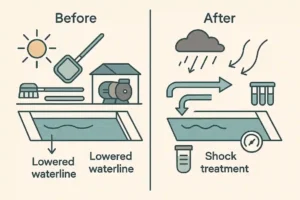 Why storms are rough on Hondo pools
Wind is the first troublemaker. It carries oak tassels and field dust, but it also whips the surface into tiny whitecaps that draw in air. Air means loss of prime, which makes your pump work too hard—especially if your skimmer weir sticks open. Then comes the rain. A heavy downpour dilutes chlorine, nudges pH, and drops seed pods and pollen in a perfect little soup. Left alone, that cocktail grinds through your filter media and lingers at the bottom until it stains.
So yes—storm preparation pool Hondo TX is about more than battening down the cover. It’s about staging a quick comeback before the backyard becomes a cautionary tale. There’s also a human side: you want to enjoy the quiet after the storm, not wrestle hoses while thunder still grumbles to the south.
The Hondo Pre- & Post-Storm Checklist
Use this single checklist before the front hits and again when the sky clears. It’s the backbone of practical storm preparation pool Hondo TX—short, real, and designed for the way weather actually behaves out here.
- Before the storm:
• Empty skimmer and pump baskets; confirm the weir door swings freely.
• Lower water to just below mid-skimmer if a heavy burst is forecast; it reduces overflow and keeps leaves from floating right into the throat.
• Roll or secure a safety/solar cover if winds aren’t extreme; if gusts will be strong, skip the cover and protect the pad instead.
• Move furniture, toys, and planters away from the pool; anything that flies turns into tomorrow’s debris removal project.
• Turn on a longer circulation cycle as the front approaches so sanitizer mixes well; dose a light, preventive shock treatment if you expect big organic load (leaves, pollen, runoff).
• Stage your essentials: brush, manual vac, test kit, and a hose for a measured filter backwash if pressure climbs afterward.
• Pad protection: close chemical lids, clear vents around the pump, and if you have a small awning, anchor it—no mulch or plastic wrapping that suffocates the motor. - After the storm:
• Walk the pad, listen for weird pump sounds, and check prime. If the basket’s packed, clear it before restarting.
• Skim the heavy stuff first. Slow, deliberate strokes—this makes later debris removal and vacuuming faster.
• Brush steps, benches, and corners so the filter can grab fines.
• Test and balance: confirm chlorine and pH, then apply a measured shock treatment (evening is best).
• Watch the pressure gauge; perform a gentle filter backwash or cartridge rinse only when it’s 20–25% above the clean mark.
• If runoff clouded the pool, let the system circulate overnight, then vacuum to waste if needed—short, focused passes beat marathon sessions.
That’s the entire playbook—one list, both sides of the storm. Follow it and recovery becomes muscle memory.
Working the plan like a local
Picture the sky turning that particular green-gray, the breeze picking up and smelling like wet cedar. A good storm preparation pool Hondo TX routine starts with the small things you can do without rushing. Empty the baskets. Nudge the waterline down a hair. If you’ve got a cover and the forecast calls for rain more than wind, use it; covers help keep organics out and tamp evaporation after the front. If winds will be sharp, leave the surface exposed and protect the equipment instead—covers can turn into sails.
Once the rain’s through, you’ll hear the neighborhood come back to life—dogs, someone dragging a trash can, a screen door clapping. That’s your cue to skim calmly and brush. You’ll be tempted to blast into big vacuum passes right away, but hold off a beat. First, get the tests. If chlorine has dipped and the water looks a little tired, apply a thoughtful shock treatment at dusk; it works quietly while you sleep and doesn’t burn off as fast. The next morning, brush again and go for slow, clean vacuum lanes. If the filter pressure rises, do a quick, respectful filter backwash and reset your “clean number” in your notes.
 How to avoid overdoing it
Rushing often makes more work. Over-backwashing strips media performance; over-shocking creates a yo-yo effect you’ll chase for days. Let the system do what it’s built to do. Good debris removal up front and a patient circulation cycle restore clarity faster than heroics. If your robotic cleaner is handy, let it run after the heavy stuff’s out—robots are fantastic at hunting fines once the worst is gone.
Protecting the pad—quiet insurance
The equipment pad is the quiet hero. Give it air and order. After a blow, leaves and grass clippings cuddle up against motor vents and heater intakes. Clear them. If your pump sounds like it’s sipping air, check the water level and the weir door first—not every wheeze means a gasket is shot. Real storm preparation pool Hondo TX prevents emergencies by fixing the five-minute problems before they turn into Saturday projects.
A small, human moment
There’s something oddly satisfying about standing beside the pool after the storm—the air cooler, the deck smelling like rain on warm stone, the surface settling into clean ripples. This is what the checklist buys you: a return to calm. Not perfection, but readiness. And next time the radar flashes red, you’ll be ten minutes from peace of mind instead of two days from clarity.
FAQs
1) Should I cover the pool before every storm?
If winds are mild and rain is the main event, a cover helps keep organics out. For strong gusts, skip the cover and prioritize pad protection and quick debris removal afterward.
2) When is the best time to shock after a storm?
Evening. A nighttime shock treatment works longer without UV burn-off and pairs well with overnight circulation.
3) How do I know if I need a filter backwash?
Watch the gauge. When pressure rises 20–25% above your clean baseline, perform a gentle filter backwash or cartridge rinse—no sooner, no later.
4) My pool is cloudy but chlorine reads okay—what now?
Brush to lift fines, run a longer cycle, and vacuum slowly the next morning. Cloudiness often clears with patience plus targeted debris removal and only-as-needed filter backwash.
5) The pump sounds airy after the storm—do I have a leak?
Maybe not. Check the waterline (mid-skimmer), confirm the weir door moves freely, and make sure the pump basket lid o-ring is clean and seated. Fixing those basics often restores prime.