Your pool is more than just a backyard oasis — it’s a system of interconnected equipment working tirelessly to keep your water clean, safe, and inviting. From pumps and filters to skimmers and heaters, every component plays a critical role. But how do you know when something is off? Recognizing the signs your pool equipment needs immediate repair can save you from costly downtime, water damage, or even full equipment replacement.
Ignoring early warning signs often leads to bigger problems. Small issues in circulation or filtration can turn clear water cloudy, promote algae growth, or cause pumps and heaters to fail entirely. Here’s what to look for.
 1. Unusual noises from pumps or motors
Pumps and motors should hum smoothly. Grinding, squealing, or rattling sounds are warning signals. These noises often indicate:
- Worn bearings
- Motor misalignment
- Clogged impellers
- Debris inside the pump
According to Aquatic Development Group, “Unusual sounds from pool equipment are frequently the first indicators of mechanical failure. Early attention can prevent costly full-unit replacement” (source).
If your pump sounds like it’s straining or rattling, call a professional immediately. Continuing to operate damaged equipment can worsen the problem.
2. Reduced water flow or circulation issues
Slow or uneven water circulation is another clear indicator of equipment trouble. You may notice:
- Water returning to the pool weakly from jets
- Skimmer baskets filling quickly with debris
- Areas of stagnant water
Low circulation can stem from clogged filters, blocked pumps, or failing valves. When water isn’t moving properly, chemicals won’t distribute evenly, leading to cloudy water, algae growth, and increased sanitizer use.
3. Leaks around equipment
Leaks are easy to overlook, especially if they are minor at first. Watch for:
- Puddles around pumps, filters, or heaters
- Moisture near valve connections
- Visible cracks or corrosion on equipment housing
Even a small leak can cause major damage over time, such as electrical shorts or structural water damage to surrounding areas. Leaks are almost always a signal that professional repair is needed.
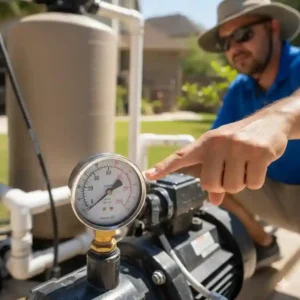
4. Pressure gauge fluctuations
Filters include pressure gauges that indicate how hard the system is working. Warning signs include:
- Rapidly rising pressure
- Unstable pressure readings
- Difficulty resetting after backwashing
Pressure issues usually point to clogged filters, air trapped in the system, or pump malfunctions. Ignoring these readings can accelerate wear and tear, shortening the lifespan of your pool equipment.
5. Visible corrosion or rust
Outdoor pool equipment is exposed to moisture and chemicals constantly. Signs of corrosion include:
- Rust stains on pumps or filter tanks
- Flaking metal around connections
- Deteriorating seals
Corrosion weakens structural integrity and often precedes leaks or mechanical failure. Regular inspection and professional maintenance are essential to prevent major issues.
6. Electrical or control problems
Modern pools often rely on automated systems for pumps, heaters, and lighting. Warning signs include:
- Intermittent or nonresponsive controls
- Tripped breakers
- Flickering displays or error codes
Electrical problems can be dangerous and should never be ignored. A licensed professional can troubleshoot and prevent hazards.
 Preventative tips
While recognizing warning signs is critical, prevention is even better:
- Schedule routine inspections at least monthly.
- Keep skimmer baskets and pump strainers clean.
- Monitor pressure gauges and equipment sounds.
- Address minor issues immediately, don’t wait for failure.
Consistent maintenance dramatically reduces the likelihood of sudden, costly repairs.
Expert advice and industry insights
Professional pool technicians recommend a proactive approach. According to Pool & Spa News, a leading industry publication:
“Routine inspections and immediate attention to early warning signs significantly extend the lifespan of pool equipment. Delaying repairs is the primary cause of expensive replacements”
— Pool & Spa News, Equipment Maintenance Report
Early intervention can save hundreds or even thousands of dollars. For example, replacing a worn impeller is far cheaper than buying a new pump. Fixing minor leaks or adjusting valves can prevent corrosion or electrical failures later on.
Quick Checklist for Homeowners
- Strange noises from motors or pumps
- Uneven or weak water circulation
- Leaks near pumps, filters, or valves
- Rapid or erratic pressure readings
- Visible corrosion, rust, or flaking
- Electrical malfunctions
If any of these are present, it’s time to call a professional immediately.
Recognizing the signs your pool equipment needs immediate repair is essential for every pool owner. Strange noises, leaks, uneven water flow, pressure fluctuations, corrosion, and electrical issues are not problems to ignore. Addressing them early can save money, prevent downtime, and extend the lifespan of your pool system.
Remember, routine inspections and professional maintenance are far more effective than waiting for an emergency. Staying proactive keeps your pool safe, clean, and inviting year-round.
For more tips on keeping your pool in top condition, check out our guide on Ultimate Guide to Pool Chemical Balancing for Crystal Clear Water, it’s a perfect complement to understanding how proper equipment operation and balanced water chemistry go hand in hand.
Frequently Asked Questions
1. How do I know if my pool pump is failing?
Listen for unusual noises like grinding, squealing, or rattling. Reduced water flow or vibration can also indicate a failing pump.
2. What are common signs of a clogged filter?
High or erratic pressure readings, slow water circulation, and debris accumulation in skimmer baskets are indicators of a clogged filter.
3. Can small leaks in pool equipment be ignored?
No. Even minor leaks can lead to corrosion, electrical hazards, or pump failure. Professional repair should be scheduled immediately.
4. How often should I inspect my pool equipment?
Monthly visual checks and listening for unusual sounds are recommended, with professional inspections at least once or twice a year.
5. Is electrical failure in pool systems dangerous?
Yes. Electrical issues can cause short circuits, shocks, or fire hazards. Only licensed technicians should handle pool electrical repairs.