
Summer in Texas means intense heat, longer swim seasons, and heavier pool usage. Proper preparation before peak temperatures arrive is essential to protect your water quality, equipment, and overall investment.
This complete checklist will guide you step by step through chemical balancing, deep cleaning, equipment inspection, and warm-climate strategies designed specifically for Texas conditions.
Why summer prep is especially important in Texas
High temperatures accelerate chlorine consumption, increase algae growth, and put additional strain on pumps and filtration systems. According to the Centers for Disease Control and Prevention (CDC), proper pool maintenance and sanitation are critical for preventing recreational water illnesses, particularly during peak swim season.
In hot states like Texas, skipping early preparation can quickly lead to cloudy water, algae blooms, or equipment breakdown.
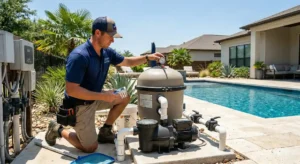
Step-by-step summer pool preparation checklist
1. Test and balance water chemistry
Start with a full water test:
- pH: 7.2 – 7.8
- Chlorine: 1 – 3 ppm
- Total Alkalinity: 80 – 120 ppm
- Calcium Hardness: 200 – 400 ppm
High heat causes chlorine to dissipate faster, so maintaining proper levels is crucial. Consider using a stabilizer (cyanuric acid) to protect chlorine from intense UV exposure.
2. Inspect and clean the filter system
Your filtration system works harder during Texas summers due to increased debris, sunscreen oils, and heavy swimmer load.
- Backwash sand or DE filters
- Clean or replace cartridge filters
- Inspect pressure gauges for abnormal readings
A clean filter ensures optimal circulation and prevents strain on your pump.
3. Check the pool pump and motor
Listen for:
- Grinding or rattling sounds
- Overheating
- Reduced water flow
Heat can cause seals and o-rings to wear faster. Inspect for leaks and ensure proper priming before continuous summer operation.
4. Deep clean the pool surface
- Before summer use increases:
- Brush walls and steps
- Vacuum the pool floor
- Clean tile lines
- Empty skimmer and pump baskets
Removing debris early prevents algae growth once temperatures climb.
5. Inspect pool equipment and safety features
Check:
- Skimmers for cracks
- Pool lights for proper sealing
- Ladders and rails for stability
- Drain covers for compliance
The Pool & Hot Tub Alliance recommends regular inspection of safety components before heavy seasonal use to ensure swimmer protection.
6. Adjust pump run time for Texas heat
During peak summer, most Texas pools require:
- 8–12 hours of circulation daily
- Additional runtime during extreme heat waves
Proper circulation prevents stagnant water and reduces algae risk.
7. Shock treatment before opening peak season
Even if your pool looks clear, a preventative shock treatment eliminates contaminants that built up during cooler months.
Run the filtration system continuously for 24 hours after shocking.
Texas-specific summer tips
Monitor water levels frequently
High evaporation rates in Texas mean you may need to refill your pool weekly.
Watch for rapid algae growth
Warm water accelerates algae blooms. Regular brushing and chlorine monitoring are essential.
Protect equipment from direct sun
Shade pump equipment when possible to prevent overheating and extend lifespan.
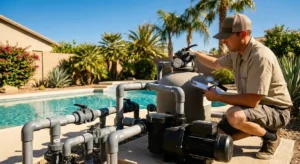
Authoritative insight on summer pool care
High temperatures significantly impact water balance and sanitation. According to the U.S. Environmental Protection Agency (EPA):
“Disinfectant levels and circulation must be properly maintained to reduce the risk of harmful microorganisms in recreational water.”
— EPA, Recreational Water Quality Guidelines
This reinforces why summer preparation in hot climates like Texas isn’t optional — consistent sanitation, circulation, and monitoring are critical during peak swim season when heat accelerates chemical loss and microbial growth.
Signs your pool is ready for summer
- Crystal clear water
- Stable chemical readings for 3–5 consecutive days
- Strong, consistent water circulation
- No visible debris or algae
- Equipment operating quietly and efficiently
Preparing your pool for summer in Texas requires more than just removing the cover and adding chlorine. With intense heat, high UV exposure, and increased swim activity, proactive maintenance is essential to protect both your water quality and equipment.
By following this complete checklist (balancing chemicals, deep cleaning surfaces, inspecting equipment, and adjusting circulation) you set your pool up for a safe, smooth, and enjoyable summer season.
For a deeper understanding of how proper water chemistry supports long-term pool health, we recommend reading our Ultimate Guide to Pool Chemical Balancing for Crystal Clear Water. Combining seasonal preparation with consistent chemical balance ensures your pool stays sparkling all summer long.