
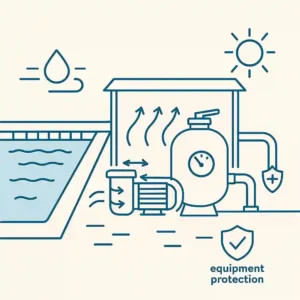
 If you own a backyard pool here, you already know that pool equipment maintenance San Antonio isn’t a “nice-to-have”—it’s survival. By midafternoon the stone deck radiates heat, the skimmer baskets catch wind-blown mesquite leaves, and your pump sounds like it’s working overtime. The sun feels personal in this city, and if you don’t build a routine around it, your equipment pays the price.
Let’s start with the pump, because it’s the heartbeat. Hot air and direct sun crank its operating temperature up; hot water returning from the pool doesn’t help either. Give the motor room to breathe—clear weeds, spiderwebs, and that cardboard box that somehow migrated next to the vents. Shade helps, but don’t smother it. A small awning or louvered cover is perfect. If you’re hearing a dry rattle or the pump loses prime in late afternoon, that’s not just “summer noise.” It’s your first nudge toward pump repair. Catch it now and it’s a gasket, not a motor.
Heat also dries rubber fast. Lid o-rings get flat; unions squeal when you twist them; tiny drips turn into salty streaks on concrete. Wipe and lube those o-rings once a month. A five-minute ritual saves a long weekend of pump repair later. While you’re there, put a hand on the pump housing. Warm is normal; scorching hot means airflow is poor or the basket’s choking on debris.
Now the filter—the quiet guardian. Sand, cartridge, or DE, it hates two things: neglect and extremes. Hot weather plus high bather load means more body oils and sunscreen, so the media clogs faster. Don’t wait until the pressure gauge looks shocked. Schedule gentle, regular filter care before the water turns dull. Cartridges like a slow hose rinse (not a pressure-washer blast). Sand enjoys a calm, thorough backwash rather than a hurried one. DE needs measured recharge, not a “shake the bag and see” cloud.
Extreme sun also warps plastic. Lids craze, sight glasses fog, and cheap aftermarket parts turn chalky. This is where equipment protection gets practical: shade the pad; keep hoses off hot concrete; don’t store chemicals above the pump where fumes chew on metal. If you’ve ever opened a faded electrical box and smelled “hot plastic,” you know the feeling—close call. Move liquid chlorine far from the motor and timer; keep lids tight; rinse spills immediately.
You might be thinking, “Do I really need all this?” Short answer: yes, but it’s simpler than it sounds. Build a small, steady rhythm around the weather. In July and August, run time usually climbs; early mornings and evenings are kinder to everything, including you. A quick tactile check as the sun sets—hand on the motor, eyes on the gauge, ear to the hum—tells you more than a dozen forums. That’s what pool equipment maintenance San Antonio looks like in the real world: attention, not obsession.
Why pool equipment maintenance San Antonio matters when the heat spikes
San Antonio doesn’t just heat up; it bakes, then the wind shows up with dust as a side dish. Equipment runs longer, motors run hotter, and tiny problems grow teeth. You can still stay a step ahead with a heat-smart routine that blends filter care, equipment protection, and just enough caution to avoid emergency calls.
First, airflow. The fastest way to cook a motor is to box it in. Those cute storage benches and plastic sheds? Great for toys, terrible for pumps. If you must cover, leave open louvers high and low so hot air can escape. Keep mulch away from the pad; it creeps into vents and traps heat. Even a small breeze under a simple shade sail makes a difference.
Second, water level. Low water in heavy heat means the pump slurps air, then cavitates, then overheats. Keep it mid-skimmer; top off at dusk so cooler water meets the system. If your autofill runs off softened water, remember that softened water plus splash-out can change chemistry—something your filter sees before your eyes do. Good filter care starts with predictable water.
Third, priming and timing. During triple digits, many locals split run time: sunrise and late evening. That gives you steady circulation without roasting your equipment at 3 p.m. If flow sags in the heat, don’t immediately assume pump repair—check the basket, the skimmer weir door, and that sneaky leaf pinned against the pump lid. Simple things steal flow first.
Finally, wiring. Heat loosens screw terminals; vibration does the rest. Once a season, cut power and—if you’re comfortable—check for discolored insulation or powdery white corrosion in the timer box. If you’re not comfortable, don’t guess; call a pro. Electrical issues aren’t DIY bravery—they’re how we end up needing more than equipment protection.
Heat-Smart Routine
- Early morning: quick skim, hand on pump housing, glance at pressure.
- Midweek dusk: rinse cartridges or backwash if pressure is 20–25% above clean mark; relube lid o-ring.
- After windy days: brush steps and corners so the filter can catch the fine dust overnight.
- Weekly: look for sun-bleached, brittle fittings; swap before they crack.
- Monthly: verify timer settings match summer plan; shade intact and vents clear.
Follow that rhythm and you’ll say the phrase pool equipment maintenance San Antonio with a lot less stress. You’ll also spend less on random parts because you’re spotting the wear before it screams.
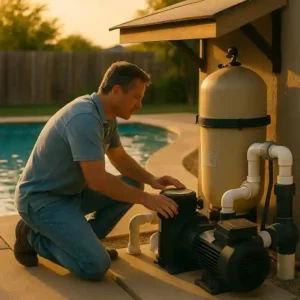 Mistakes that cook equipment—and what to do instead
The most common summer error? Smothering the pad. We hide equipment for curb appeal, then wonder why motors run hot. Let it breathe. Another quiet killer is ignoring leaks. A lazy drip at noon becomes steam by four; the salt ring on concrete is your postcard from tomorrow’s pump repair. Wipe, lube, tighten. If a union still weeps, replace the o-ring—cheap fix, huge payoff.
People also over-clean filters in the heat. Sounds backward, but aggressive blasting shreds fibers and shortens media life. Gentle, frequent filter care beats heroic “deep cleans” that leave cartridges fuzzy and weak. And watch the chemical shelf—acid fumes rust screws and timer springs, then you’re chasing phantom electrical gremlins instead of practicing equipment protection.
So when do you call in help? If a motor shrieks, trips a breaker, or you smell hot varnish—stop. If pressure swings wildly or you see sand or DE returning to the pool, that’s beyond routine. Those are the moments a technician saves you money because they prevent collateral damage. Think of professional service the way you think of dentists: cleanings keep you far from root canals.
Let’s end on a scene you’ll recognize. It’s late, the sky still bright with heat, and the pump hums low like a cat purring. Water slides through returns; the deck smells faintly of warm stone and sunscreen. You did your small checks—shade anchored, vents open, lid o-ring slick and seated. That’s the quiet win. Pool equipment maintenance San Antonio isn’t flashy; it’s a habit that keeps summer easy.
And if you want to round out the routine, pair this guide with our piece on “Pool Water Conservation San Antonio.” Cooler equipment plus thoughtful water use? That’s the kind of balance that carries you through August without drama.
FAQs
1) How long should I run my pump during a San Antonio heatwave?
Split the schedule: early morning and evening. It keeps flow steady while avoiding peak-heat stress—core to pool equipment maintenance San Antonio.
2) What’s the quickest way to prevent emergency pump repair?
Keep baskets clear, maintain water at mid-skimmer, and lube the lid o-ring monthly. Those tiny habits stop most pump repair calls.
3) How often should I service my filter in summer?
Check pressure every few days. When it’s 20–25% above clean, do gentle filter care (rinse/backwash). Avoid aggressive blasting that ruins media.
4) Does shading the equipment really help?
Yes—shade lowers surface temps and protects plastics. Just leave airflow; equipment protection fails if the motor can’t breathe.
5) When should I call a technician instead of DIY?
Motor shrieks, breakers trip, burning smell, sand/DE returning to pool, or repeated priming failures. Professional diagnostics prevent bigger repairs.
