
If you care about crystal-clear water and happy skin, you need to understand how pool chemical balancing San Antonio really works. Our summers are bright, windy, and long—great for barbecues, terrible for chemistry stability. UV light shreds sanitizer, heat nudges pH upward, and the city’s hard water can throw curveballs. The result? One day your pool looks perfect; the next it’s a little dull, maybe a hint of irritation after a quick swim. Let’s fix that.
 Why pool chemical balancing San Antonio feels different
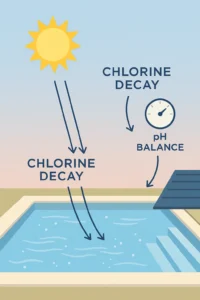
The Texas sun doesn’t just warm your back; it bites into your sanitizer. Chlorine is like sunscreen for your water, but UV rays “burn it off.” That’s why chlorine levels seem fine in the morning and mysteriously low by dinner. You’ll also notice the water feels “thirstier” for chemicals after windy days—dust and pollen introduce extra workload, and swimmers add lotions, sweat, and general life to the mix.
What sunlight does to chlorine
Stand beside the pool at noon and watch sunlight glitter on the surface—that shimmer is beautiful, and it’s also the moment chlorine works the hardest. When the sun is high, free chlorine decays faster, especially if stabilizer (cyanuric acid) is low. A simple way to picture it: stabilizer is sunscreen for your chlorine. Too little and your chlorine levels burn off; too much and chlorine falls asleep in the shade and stops working as fast.
Why heat pushes pH up
Warm water invites aeration—tiny bubbles from splashing, water features, or just wind—and that aeration slowly lifts pH. High pH makes chlorine less effective and can leave water feeling “slippery.” Aim for a steady pH balance near 7.4–7.6 so sanitizer remains efficient and swimmers feel comfortable.
Comfort first: the “safe water” test
Real talk: what most people call “chlorine smell” is usually chloramines, the by-products of chlorine doing its job. Fresh, balanced water has a faint, clean scent; harsh odors mean you need to adjust chlorine levels and oxidize. When chemistry is right and the pH balance is steady, you’ll notice fewer red eyes, softer skin, and genuinely safe swimming.
For quick reference, see CDC residential pool guidelines—a helpful starting point for ranges and testing basics: CDC pool disinfection basics. And keep an eye on local drought rules: San Antonio Water System drought updates.
The daily rhythm that keeps chemistry steady
Here’s the rhythm we teach local families, the heartbeat of pool chemical balancing San Antonio. Mornings and evenings are your best friends—cooler temps, gentler light, truer readings. Test when the pool is calm, then make small, precise moves instead of big swings.
Start by tracking your chlorine levels at the same time each day for one week. You’ll see a pattern: lower by sunset, sometimes surprisingly so after a long, bright day. Once you know the drop, you can dose proactively. Tablets (for convenience) or liquid chlorine (for faster control) both work; pick the style you’ll actually stick with. Just remember that tablet use adds stabilizer over time, which may nudge you to dilute water later to keep that pH balance and sanitizer strength in harmony.
Think of testing pH like tuning a guitar. If the note drifts sharp (high pH), add a little acid; if it’s flat (low pH), bump alkalinity back into range so pH resists drifting. A steady pH balance protects surfaces, keeps chlorine levels useful, and makes safe swimming feel effortless—no itchy skin, no stinging eyes.
A one-sheet Texas checklist
- Test in the cool hours (morning/evening) for truer chlorine levels and pH balance.
- Dose the day’s sanitizer need based on yesterday’s drop.
- Keep stabilizer moderate—enough to shield chlorine, not so much it slows it down.
- Brush steps and corners twice a week; cleaner surfaces help sanitizer win.
- Rinse off before you swim (a quick shower reduces lotion load).
- Cover the pool when not in use; evaporation and UV both fall, and safe swimming costs less effort.
“Read” your pool like a neighbor
This is still science, sure, but it’s also a relationship. Water looks a little dull after a dusty wind? Expect lower chlorine levels tonight. Kids cannonballed all afternoon? Aeration pushes pH balance up—double-check before bed. After two weeks of paying attention, you’ll hear the pool’s “voice” in small changes—how it looks, feels, even smells at dusk.
And yes, automation helps. Timers, basic smart monitors, even a robotic cleaner can reduce debris load so chemistry doesn’t fight an uphill battle. Less junk in the water means steadier chlorine levels and calmer pH balance, making safe swimming the default, not an exception.
 Mistakes that quietly wreck balance (and how to avoid them)
The most common stumble in pool chemical balancing San Antonio is chasing big corrections. Overdose today, counter-dose tomorrow, repeat. Instead, use half-doses with retests in 30–60 minutes. Your water will thank you. Another trap is “set and forget” stabilizer. Remember the sunscreen metaphor: a little shade is perfect, too much turns sanitizer lazy. If chlorine levels read fine but algae still wins, stabilizer may be high—dilute a portion of water and try again.
Next up: ignoring pH drift after parties or storms. Aeration plus heat nudges pH upward; let that run wild and your pH balance blunts sanitizer. Brush after windy days, keep water circulating, and check pH the following morning. And don’t forget metals and hardness—San Antonio’s hard water can leave white film if pH balance climbs and calcium spikes. Small, steady adjustments beat dramatic ones every time.
A feel-first way to confirm balance
Balance is also a feeling. Well-kept water has a soft glide across your skin, a clear sparkle at noon, and a quiet, almost neutral scent. If the water looks glassy but eyes sting, inspect pH balance first, then chlorine levels. If it looks clean but smells “pool-y,” oxidize gently and keep an eye on organics (lotions, leaves). When numbers and senses agree, you’ve reached truly safe swimming.
A San Antonio example day
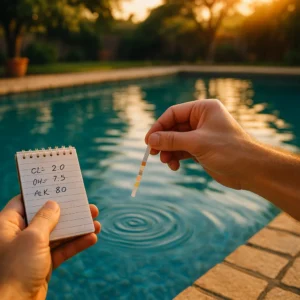
Morning shade over the water, birds arguing in the oaks. You test: 3 ppm free chlorine, pH 7.5—nice. By sunset, after a bright, breezy day, free chlorine drops to 1.5 ppm and pH edges to 7.7. You dose lightly, brush the steps, and roll the cover. That’s the quiet routine that defines pool chemical balancing San Antonio—small moves, timed well.
Mastering pool chemical balancing San Antonio isn’t about being a chemist; it’s about paying attention. Use the sun’s schedule to your advantage, dose to the day, and keep that pH balance steady so chlorine levels stay useful. Do that, and safe swimming becomes your pool’s default personality—welcoming, gentle, and reliable.
If water stewardship is on your mind (it should be), pair this routine with our guide “Pool Water Conservation San Antonio: Smart Drought Tips”—perfect companions for clear, comfortable water that respects our dry climate.
FAQs
- How often should I test in summer?
Test chlorine levels and pH balance at least 3–4 times per week in peak heat, mornings or evenings for truer readings. - What’s a good target for safe swimming?
Many outdoor pools feel best near 2–4 ppm free chlorine and a pH balance around 7.4–7.6. Comfort plus clarity equals safe swimming. - Why does my chlorine disappear by afternoon?
Intense UV breaks sanitizer apart. Keep stabilizer moderate and consider evening top-ups to protect chlorine levels. - Do tablets or liquid work better?
Both work. Tablets add stabilizer over time; liquid gives quick control without extra CYA. Choose the method that helps you keep chlorine levels steady. - How do I fix itchy eyes without over-chlorinating?
Check pH balance first—eye irritation often comes from pH drift, not low sanitizer. Then confirm chlorine levels and oxidize gently if the water smells “off.”