
The fastest way to stop that sinking feeling literally is to start with pool leak detection San Antonio done the simple, local way. You don’t need fancy gear to figure out whether you’re dealing with normal evaporation or a true problem. You need a calm eye, a marker, and twenty quiet minutes. Here’s the truth most owners discover the hard way: slow leaks masquerade as “just a hot week.” Then you realize the autofill won’t rest and your chemicals won’t hold. That’s when a few at-home tests reveal what’s really going on.
Begin with the setting. Early morning in San Antonio works best the air is cooler, the wind is lazy, the pool surface looks like polished glass. Stand beside the skimmer and breathe in that faint chlorine-clean scent; it should smell like a swim day, not a hotel lobby. Now take a slow lap around the waterline. You’re scanning for small clues: a damp ribbon along the outside of the equipment pad; a hairline crack at the tile grout; an area of coping that looks darker, as if it’s drinking the sun. These tiny tells matter during pool leak detection San Antonio because leaks are shy by nature.
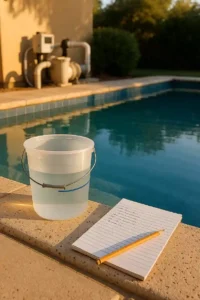
Your next move is ridiculously simple and surprisingly accurate: the bucket test. Fill a clean plastic bucket with pool water, place it on the second step so the bucket water and pool water share the same temperature and breeze, and mark the water level inside the bucket and on the pool tile with a pencil or a strip of painter’s tape. Turn the pump off for twenty-four hours if you can. That comparison bucket vs. basin separates evaporation from water loss. If the pool line drops more than the bucket line, you’re not imagining things. Repeat the bucket test with the pump running to see if circulation accelerates water loss; that often points to a suction or return side issue.
Here’s a small, human tip: write the time on the tape. You’ll forget otherwise, and guessing defeats the purpose. I also like to set an alarm on my phone labeled “check bucket,” because life gets loud and your pool shouldn’t have to shout. Remember, pool leak detection San Antonio isn’t a single trick it’s a small rhythm. Measure. Compare. Then move closer to the source.
If the bucket test says “leak,” don’t panic. Imagine peeling an onion: you’ll test a few zones one by one—shell, skin, core until the culprit blinks. We’ll start with the easy stuff you can do in sandals and end with the point where calling for repair is the smart, money-saving choice.
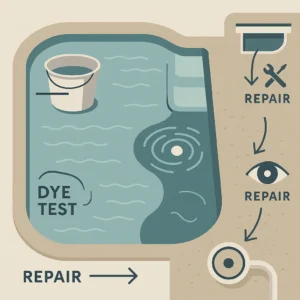
Where Leaks Hide in San Antonio Backyards
Every region has its usual suspects, and pool leak detection San Antonio has a familiar cast. Strong sun, shifting clay soils, and wind-blown pollen all play a part. Start with fittings you touch often skimmer lids, return eyeballs, vacuum plates. A cracked o-ring at the pump lid can mimic water loss, fooling you into thinking the basin is shrinking when the pad is just gulping air. Clean and lube that gasket; it’s five minutes that saves five headaches.
Next, take a slow look at the tile line and the mastic (that flexible joint between deck and coping). Over time, that seam dries, opens, and channels spray water under the deck. You’ll sometimes see a faint white line where water weeps out and dries. Gently press the mastic with a fingertip; if it crumbles like old cake, note it. While you’re there, peek inside the skimmer throat. Hairline cracks along the skimmer box can be sneaky barely visible until you rub a damp cloth and watch the line darken. Those hairlines are classic repair candidates once you’ve confirmed water loss with the bucket test.
If the structure looks sound, shift to plumbing clues. Run the pump and watch the equipment pad. Any drip at a union? Any salted crust on metal nearby? That crunchy coating often means a tiny spray has been drying for weeks. On the return side, a leaf pattern that swirls in the same corner every afternoon can point to a flow imbalance not a leak but it’s also where a return fitting might be loose. On the suction side, listen for a hollow rattle when the pump kicks on. Air in the basket means a bad seal or a suction line issue; it doesn’t prove a basin leak, but it narrows the search and informs the eventual repair.
Underwater, you can do gentle dye tests. A small squeeze bottle with food-grade dye works; hold still, release a thin ribbon near suspect spots around lights, main drains, and return fittings and watch. If the color pulls inward like smoke being inhaled, you’ve found a path. Turn off all water features during this step so you’re not fighting currents. Light niches are frequent players in pool leak detection San Antonio because heat and expansion nudge those gaskets over time. If dye gets drawn into the niche or around the conduit hole at the back of the can, note it carefully.
One more piece of the sensory puzzle: sound. On a still evening, kneel beside the equipment pad and cup your ear. A rhythmic hiss that isn’t the pump could be a tiny pressure-side drip. In the water, press your palm to the wall; if you feel unusual coolness near a crack or fitting, that’s fresh water movement another quiet signal of water loss.
Now you’re ready for a focused pass—the only list you’ll need—so your notes turn into answers.
DIY Leak-Tracking Checklist
- Confirm with a two-stage bucket test (pump off, then pump on) to establish true water loss.
- Inspect and lube pump lid o-ring; reseat and re-prime to eliminate false air leaks.
- Scan tile, mastic, and skimmer box for hairlines; mark anything suspicious.
- Run a slow equipment check: unions, heater bypass, chlorinator, and valve stems for weeps or salt crust.
- Perform dye tests at lights, returns, steps, and main drain; record any inward pull.
- If water stops dropping exactly at the skimmer mouth or a return, flag that level for targeted repair.
Keep those notes. When you call a pro, that map shortens the visit and the bill—because pool leak detection San Antonio goes faster when your observations are clear.
When to DIY and When to Call a Pro
 Some leaks are friendly. You replace an o-ring, tighten a union, or patch a tiny skimmer crack with an underwater-rated sealant and you’re back to weekend calm. Others are stubborn, and that’s the moment pool leak detection San Antonio graduates from “handy homeowner” to “bring instruments.” Professional techs use pressure testing to isolate plumbing runs and acoustic or helium sniffers to pinpoint impossible spots. The rule of thumb: if your bucket test shows more than a quarter-inch per day of water loss, or your dye test points at a light niche or main drain, schedule a professional repair. Those areas mix safety and structure; guessing gets expensive.
Before the appointment, do two things. First, photograph your dye tests and the tape marks from your bucket test with timestamps. Second, note whether water loss changes when the pump runs. That single detail tells a tech which side of the plumbing deserves the first pressure cap. With good prework, a pro can move from isolation to repair quickly resurfacing a light gasket, patching a skimmer throat, or locating a broken return under the deck with minimal demo.
Prevention is the quiet partner in all this. Keep your waterline caulk healthy so spray doesn’t tunnel under the deck. Lubricate o-rings every season. Avoid over-tightening unions, which flattens gaskets and invites drips. If your autofill hides the problem by topping off, turn it off once a month and watch the level for forty-eight hours. Those small habits make pool leak detection San Antonio a rare event instead of a yearly chore.
There’s also the human payoff. When a slow leak is fixed, chemistry stabilizes; sanitizer stops vanishing; the pool stops “eating” salt; and you stop side-eying the waterline at breakfast. You’ll hear the equipment pad relax—a steady hum instead of that anxious slurp—and the water will look unbothered again, a sheet of blue with clean light sliding across it. That’s the whole point.
If you want to stack the deck further, pair this guide with our Pool Water Conservation San Antonio article. Less evaporation means your bucket test results are easier to read, and your makeup water—and the minerals it brings—stay in check. Clarity, calm, and lower bills tend to travel together.
FAQs
-
How much daily drop is normal in San Antonio?
Hot, breezy days can evaporate up to a quarter-inch. If the bucket test shows the pool dropping more than the bucket, you’re seeing true water loss.
-
Why test with the pump on and off?
Different results hint at plumbing location. More water loss with the pump running suggests pressure-side issues; worse with it off can point to suction or structural paths.
-
Can I dye test a light niche safely?
Yes—pump off, move slowly, and never remove the fixture underwater. If dye pulls into the niche or conduit, save that evidence and schedule a repair.
-
What if the water stops falling at the skimmer?
That level often points to the skimmer throat or weir area. A targeted repair—resurfacing or sealing—usually solves it.
-
Do leak sealers poured into the pool work?
Sometimes for tiny plumbing weeps, but they can gum filters and aren’t a fix for structural cracks. Use them cautiously and only after confirming with pool leak detection San Antonio tests.
