
If you want to glide into spring without surprises, the smartest move is to winterize pool San Antonio in a way that respects our mild, oddly moody winters. We don’t get months of snow; we get warm afternoons, sudden blue-northers, and the occasional freeze that shows up at 3 a.m. and leaves by lunch. That mix can be hard on pumps, seals, heaters, and finishes—unless you plan ahead with gentle adjustments, steady filter care, and basic equipment protection that fits how we really live here.
Close your eyes and picture an early December evening: the sky washed in peach, mesquite leaves skittering across the deck, water quiet as glass. You can smell the faint mineral note that means the chemistry is calm. This is when winter prep should feel easy—more like tidying up after a great party than packing up the whole house. In South Texas, the goal isn’t to mothball the pool; it’s to dial it into low-stress mode and prevent needless pump repair when those short cold snaps punch above their weight.
 Why winterize pool San Antonio is different
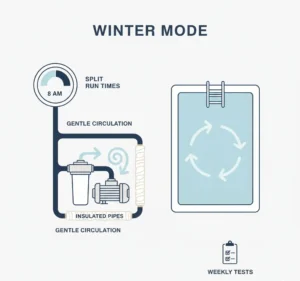
Pools in colder states are drained below the skimmer, blown out, and put to bed. Not here. Our focus is keeping water circulating, protecting the pad, and maintaining chemistry so you don’t inherit a swamp in March. When you winterize pool San Antonio, think “light blanket, not hibernation.” You’ll run the pump shorter daily windows, keep the surface covered more often, and lean on small habits—like brushing corners and checking the pressure gauge—to keep the system stable without babysitting it.
The biggest villain is temperature whiplash. Warm afternoons encourage light algae growth; sudden freezes strain motors and brittle plastics. That’s why equipment protection—simple shade on the pad, a breathable cover, insulated pipes where they’re exposed—matters as much as chemistry. The other pressure point is wind-blown dust: circulation slows in winter, so fine grit lingers on steps and benches unless you give the brush a lazy lap once a week. A minute now prevents hours of filter care later.
Chemistry shifts too. Cold water holds chlorine longer, but pH can creep as rain dilutes and hard water sneaks back when you top off. You want a steady, light hand: keep free chlorine modest but present, pH near 7.5, alkalinity supporting pH, and calcium balanced so you don’t chew at plaster when the water’s chilly. If you ever want a neutral reference point for safe residential ranges, scan bold CDC residential pool guidance. For top-offs during drought stages, check bold SAWS drought stages.
In short, to winterize pool San Antonio well, you slow things down without walking away. You make the system comfortable—like switching to a lighter jog and better shoes—so the equipment coasts, not fights. That’s how you keep pump repair off your calendar and the water close to spring-ready.
The One-Page Winterizing Checklist (San Antonio Edition)
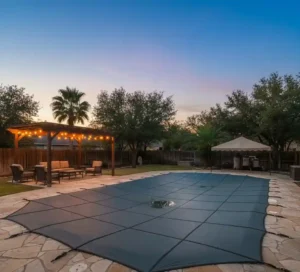
- Roll out a breathable cover most nights; uncover on warm, sunny days to let the water breathe and deter musty odors.
- Set your timer to shorter shoulder-season cycles; split into morning and late afternoon to avoid 3 p.m. heat spikes on the motor.
- Keep water at mid-skimmer; top off after windy weeks. Cold, consistent levels protect seals and reduce cavitation that leads to pump repair.
- Test chemistry weekly: maintain sanitizer, hold pH ~7.4–7.6, support alkalinity, and keep calcium in range to avoid etching or scale.
- Brush once a week—steps, benches, and that shady corner algae loves; steady brushing equals easier filter care.
Glance at the pressure gauge; clean/backwash only when 20–25% above clean mark. Gentle, regular care preserves cartridges and grids.
Insulate exposed pipes and wrap the pump lid band with a light cover on freeze-watch nights; leave vents open so motors can breathe—smart equipment protection. - Clear the pad: no mulch against the motor, no chemical jugs above timers, no leaves blocking vents.
- Test freeze-protection mode if your controller has it; confirm the pump actually spins up when temps drop.
- Note anything new—tiny weeps at unions, louder bearings, slower prime—so a small part swap now doesn’t become big pump repair later.
Timing, water level, and chemistry in a mild winter
San Antonio’s winter has a rhythm: cool mornings, pleasant afternoons, occasional north wind that smells like cedar and distant rain. Use those cool windows for sampling and dosing. Cold water gives you glide—chlorine lasts longer—so you’ll add less, but you still add. Stable sanitizer keeps biofilm from colonizing hidden seams, which makes spring a breeze. Holding pH in the sweet spot keeps the water gentle on plaster and eyes, and, bonus, reduces scale on tile when heaters kick on for a holiday swim.
When rain dilutes, water feels softer and may tease pH down; when you top off with our characteristically hard water, it nudges scale risk up. Small moves win. Half-doses followed by re-checks are winter gold. With that approach, filter care stays easy and surfaces keep their clean, satin look.
Keeping equipment comfortable
A happy pad is tidy, shaded, and ventilated. Plastic sheds that suffocate motors turn into sauna boxes by late afternoon; choose shade sails or awnings with real airflow. On freeze-watch nights, slip on a breathable motor cover, insulate exposed PVC elbows, and confirm the timer won’t cut power right when freeze protection tries to run. That’s equipment protection that actually works—no drama, no 2 a.m. panic.
If you hear a dry whine, see salty rings under a union, or smell hot varnish after a long run, pause. Those are early warnings. A relubed lid o-ring, a tightened union, or a quick bearing check now prevents mid-January pump repair when parts take longer to arrive.
And if you’re wondering whether a robotic cleaner has a role in winter: yes, occasionally. A slow lap here and there keeps silt from becoming a film; less debris means happier media and less filter care come March.
 Common mistakes (and the gentler choices that fix them)
The biggest mistake is treating South Texas like Minnesota—draining too low, shutting everything off, and walking away. In our climate, that invites dust, stains, and brittle fittings. The reverse problem is doing nothing: uncovered water, zero brushing, no testing “because it’s winter.” That’s how a mild season turns murky and equipment ages in dog years.
Another trap is aggressive cleaning. Pressure-washing cartridges into fuzzy pulp feels satisfying and shortens their life. Gentle hose passes protect fibers; backwash sand or DE only when the gauge tells you. That restraint is the soul of filter care and a quiet path to fewer parts on your shopping list.
Don’t store trichlor or acid on the pad, either. Fumes quietly corrode timer springs and relay contacts—one day the pump won’t start, and you’ll think pump repair when it’s really a toasted timer. Keep chemicals upright, capped, and away from electronics. It sounds fussy; it’s basic equipment protection.
DIY vs. call a pro (and how to tell the difference)
Do it yourself when winter is behaving: cover, skim, brush, test, tiny doses, visual inspections. Call a technician if you notice repeated priming issues, leaking seals, returning sand/DE to the pool, or inconsistent freeze-protection starts. Think of pros as dentists: cleanings and small fillings keep you far from root canals. A quick winter tune-up can also benchmark your system—clean pressure mark, motor amperage, and controller settings—so you know what “normal” looks like.
Your winter mode in one paragraph
At dusk, you roll the cover, hear the pump settle into a soft purr, and jot two numbers—pH and pressure—in a small notebook clipped to the pad. The air smells a little like cedar and cool stone. Tomorrow’s a sunny 70; the day after could flirt with a freeze. It’s fine. You’ve trimmed the schedule, brushed the corners, kept sanitizer present, and lined up small defenses against weather mood swings. That’s how you winterize pool San Antonio: steady, light, seasonal. The payoff is opening day that feels like you never really closed.
If saving water is part of your winter plan—and it should be—pair this guide with our drought-season piece, Pool Water Conservation San Antonio, for cover habits and topping-off logic that complement this approach without adding work.
FAQs
1) Do I need to drain my pool below the skimmer in San Antonio?
Usually no. Our winters are mild. Keep water at mid-skimmer, maintain circulation, and focus on equipment protection and chemistry.
2) How long should I run my pump in winter?
Shorter daily windows work—often split between morning and late afternoon. Adjust by clarity and the pressure gauge to reduce pump repair risk.
3) What chemistry targets make winter easy?
Hold light, steady sanitizer; keep pH ~7.5 with supporting alkalinity; maintain calcium to protect plaster and tile—foundation of good filter care.
4) Do I need a cover in South Texas?
A breathable cover most nights slows debris and heat loss, helps chemistry, and supports equipment protection during cold snaps.
5) When should I call a pro?
If freeze protection doesn’t trigger, the pump won’t prime, the gauge jumps wildly, or you see sand/DE in the pool—those signs point beyond DIY and may prevent larger pump repair.
