
Pool filter vs vacuum—three simple words, but a world of difference. If you want your pool to be more oasis and less swamp, understanding how these two systems work isn’t just helpful—it’s essential. And yet, many pool owners toss them into the same mental bucket, assuming they’re interchangeable. Spoiler alert: they’re not even playing the same sport. The filter is your quiet, loyal workhorse—always on, never asking for credit. It keeps the water moving, pulling in dust, pollen, and those invisible freeloaders that somehow make the pool feel gritty even when it looks clean. The vacuum, on the other hand, is the enforcer. No elegance, no subtlety—just brushes on tile and business in motion. It sucks up the obvious culprits: leaves, dirt, and the occasional sun-dried beetle lounging at the bottom like it owns the place. Think of it as deep cleaning day in your underwater living room.
Still puzzled by the whole pool filter vs vacuum dynamic? Don’t sweat it—you’re far from alone. Just picture this: it’s a scorcher in mid-July, the Texas sun is frying eggs on the patio, and oak leaves are drifting into your pool like it’s autumn auditioning for summer’s role. The filter hums loyally in the background, doing its thing… and yet, the water looks tired. Dust shimmers on the surface, debris dances lazily near the drain. That’s when the vacuum steps up—no hum, no pretense. Just that oddly satisfying slurp as it glides across the floor, the broom and dustpan of your aquatic living room, restoring order where the filter politely bowed out.
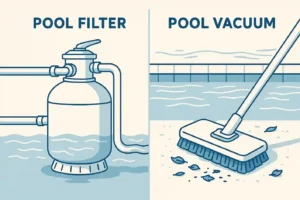 Understanding the Basics: Filter vs Vacuum
To break it down, the pool filter vs vacuum debate isn’t about which is better, but about using both the right way. The filter is the quiet genius in the background—the introvert of the pool world. No drama, no fuss. No glory, no spotlight. Just quiet, relentless work. It pulls water through layers of sand, cartridges, or diatomaceous earth, catching the microscopic intruders you’ll never see but would absolutely feel if they stuck around. Dust, pollen, invisible grit—it tackles them all with the precision of a backstage crew making sure the show runs flawlessly. There’s no applause, no standing ovation—just the invisible satisfaction of a job done so well, you forget it ever had to be done at all.
Now, the vacuum? That’s a whole different character. It’s hands-on, unapologetically practical, and a bit more showy. Whether you’re wielding it yourself or letting a robotic sidekick do the job, the vacuum dives in and deals with the obvious offenders—leaves, pebbles, dirt—the kind of debris that your filter frankly has no patience for.
If the filter is your pool’s lungs, constantly inhaling and exhaling to keep the water clean, then the vacuum is the cleaning crew with gloves on and a checklist in hand. It gets into corners, scoops up yesterday’s storm, and erases the evidence of muddy feet. Alone, each system has its strengths. But together? They strike a beautiful balance—delivering that crystal-clear, jump-right-in water that makes the whole effort worth it.
When to Use Your Filter
Your filter should run daily, usually 8–12 hours depending on pool size, weather, and usage. During heavy swimming weeks or after storms, you may need to run it longer. In San Antonio summers, when temperatures soar past 100°F, longer filtering helps battle algae growth. Ignore the filter, and cloudy water creeps in fast.
But don’t expect the filter to do everything. If leaves fall in, or sand gets tracked from bare feet, the filter alone won’t remove them. That’s where you’ll notice its limitations.
When to Use Your Vacuum
The vacuum deserves its weekly moment in the spotlight—at least once a week, and more often if your backyard doubles as a botanical garden. Think of it as the muscle of your pool care routine, stepping in to do the heavy lifting. Leaves, twigs, dirt—it scoops up the mess before it morphs into something sneakier, finer, and far more annoying for your filter to handle.
Vacuuming isn’t just about appearances—it’s a smart way to protect your system. Every pass with the vacuum gives your filter a well-earned break, sparing it from overwork and extending its life. Less stress on the machinery means more time enjoying your pool and less time wondering why your pump sounds like it’s having an existential crisis.
A friend once told me she ignored vacuuming for two months, thinking her filter would cover it. The result? Her pump clogged, algae bloomed, and she spent hundreds fixing something that could have been avoided with regular vacuuming.
The Advantages of Filters
Line up the pool filter next to the vacuum, and you’ll notice something curious: the filter quietly steals the spotlight—mostly because it never tries to. No fuss, no ego. Just relentless commitment. While you’re busy sipping lemonade, scrolling your phone, or forgetting your pool exists altogether, the filter is hard at work. It pulls water through its depths like a silent sentry, sifting out invisible troublemakers—dust, pollen, and that slick film of sunscreen that clings to the surface like a regrettable text message at midnight. You can’t see them, but you can feel their absence when the water looks glassy and feels like silk.
The magic of the filter is its consistency. Unlike vacuuming, which is a task you schedule (and occasionally postpone), the filter just… does its thing. Day in, day out. It lowers bacteria levels, fends off algae like a quiet bouncer, and keeps your water from turning into a science experiment. Without it, you’d be out there skimming and scrubbing every other afternoon, muttering curses at leaves.
But—because there’s always a “but”—filters have their kryptonite: large debris. After a good Texas thunderstorm, for example, when leaves descend like they’re staging a protest, the filter basket chokes fast. Efficiency drops, the pump starts wheezing, and that’s your cue: enter the vacuum, stage left. It doesn’t care about subtlety—it just gets things done.
The Advantages of Vacuums
In the eternal Pool filter vs. vacuum debate, the vacuum earns its stripes for precision. It doesn’t just swirl water aimlessly—it goes straight for the jugular. In the great pool filter vs vacuum debate, this part is all about the mess you can see—the bold, shameless kind. Leaves clinging to the floor like houseguests who’ve long missed the hint, and sand piling up in corners, murmuring like uninvited neighborhood gossip. It’s not subtle, and it’s definitely not going away on its own.
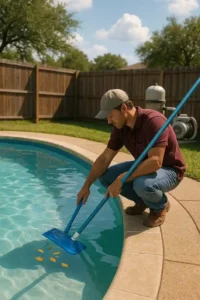
Whether you’re pushing a manual vacuum with sunburned resolve or letting your robotic sidekick take over, there’s an oddly peaceful rhythm to it. The hose glides across the floor, carving clean, deliberate lines through the debris—like mowing a lawn on a sleepy Sunday afternoon, only slicker, quieter, and somehow more rewarding. In the pool filter vs vacuum partnership, this is the hands-on moment—the part that feels less like maintenance and more like meditation.
But don’t be fooled by the soothing motion—vacuuming isn’t just about looks. Let dirt linger too long and it starts scheming. First, it stains your pool surface. Then it breaks down into sneaky particles that slip past your filter and clog your system like cholesterol creeping through arteries. Especially during the dusty, wind-whipped summers of Texas, skipping your weekly vacuum is less “no big deal” and more like sending sediment a formal invitation to move in.
And here’s the part no one tells you: vacuuming can actually save you money. By tackling the big messes early, you give your filter a break. Less strain means fewer repairs, less energy used, and lower bills. It’s not just good pool hygiene—it’s good economics.
How to Combine Filter and Vacuum for Maximum Effect
Now, here’s where the pool filter vs vacuum discussion turns into teamwork. Using them together ensures your pool is cared for on every level. Here’s a simple approach:
- Run the filter daily to keep water circulating and particles trapped.
- Vacuum weekly to remove larger debris before it breaks down.
- Backwash or clean your filter regularly, especially after vacuuming a heavy load of debris.
- Inspect your vacuum hose and brushes to ensure they’re not clogged or worn out.
Think of it like house cleaning. You wouldn’t rely only on your air filter to keep your living room tidy, right? You’d vacuum the carpet, dust the shelves, and occasionally mop. The pool deserves the same layered care.
A Texas Reality
Texas, of course, likes to keep things interesting. One minute it’s calm, the next you’re chasing patio furniture across the lawn. High winds sweep in like uninvited guests, dumping dust and leaves into your pool almost daily. And let’s not forget those surprise thunderstorms that show up overnight and leave behind a mess like a rock band in a hotel suite.
Whether you live beneath the shady canopies of San Antonio’s suburbs or out in the wind-lashed plains near Hondo, the “once-a-week” vacuuming rule might not cut it. The key? Adapt. Let your surroundings dictate your rhythm. Listen to your pool like you’d listen to a pet: when it looks distressed, it probably needs attention.
By marrying the filter’s quiet persistence with the vacuum’s targeted precision, you strike gold—that sweet spot where your water looks inviting, feels like silk, and even smells like summer should. Clean, clear, and calm… no matter what chaos the Texas skies throw your way.
 Common Mistakes to Avoid
When weighing the pool filter vs vacuum, many homeowners make the mistake of relying too heavily on one system. Some think the filter alone will magically keep the pool spotless. Others vacuum obsessively but rarely maintain their filter. Both approaches lead to cloudy water and wasted effort.
One of the most common (and costly) mistakes? Forgetting to clean the filter itself. Think of it like trying to sip lemonade through a straw packed with mud—water barely trickles through, the pressure builds, and sooner or later, your pump starts to wheeze like it’s run a marathon in July. Whether it’s backwashing a sand filter, rinsing off a cartridge, or replacing it altogether, filter maintenance is just as vital as vacuuming. Maybe even more.
Then there’s the other side of the coin: the selective vacuumers. The ones who only hit the obvious spots, gliding past steps and corners like they don’t exist. But dirt isn’t lazy—it hides. In crevices, along ledges, under stairs. And once algae finds a home, it multiplies like gossip in a small town. Taking the extra few minutes to be thorough—even under that relentless Texas sun—can be the difference between a pristine pool and a green regret.
Pro Tips for a Balanced Routine
The real secret in the filter vs. vacuum debate? It’s not about choosing sides—it’s about balance. Your pool isn’t just a body of water. It’s a living, breathing ecosystem. And like any living thing, it thrives with rhythm: daily attention, weekly habits, and the occasional seasonal overhaul.
Here’s how to keep your maintenance dance in sync:
- Put your filter on a timer: Let it run 8–12 hours a day. That steady flow keeps water fresh and algae at bay.
- Vacuum after storms or parties: Big messes don’t wait. Neither should you.
- Test your chemical levels like you check your morning coffee—regularly and with purpose. Balanced water makes both systems work better.
- Short on time? Let a robot help. Robotic vacuums don’t complain, don’t sweat, and always show up.
- Don’t neglect the walls and steps: A quick brushing before vacuuming helps loosen the dirt that likes to hide and plot.
Master this rhythm, and pool care transforms. No more sighing at the sight of leaves. No more dreading Sunday cleanup. Just clear water, sun-warmed tiles, and the smug satisfaction of knowing your oasis is under control.
So, who wins in the filter vs. vacuum face-off? Neither. Because they’re not fighters. They’re teammates. The filter is your silent sentinel, cycling and purifying like the tide. The vacuum is your precision operative, tackling the dirt that dares to settle. Alone, they struggle. Together, they shine.
And in Texas, where nature likes to throw in dust, wind, and the occasional leaf tornado, this alliance isn’t just helpful—it’s essential. Your filter alone can’t fight a post-storm debris invasion. And your vacuum, valiant as it is, can’t touch the microscopic culprits. But side by side, they restore order with quiet, relentless efficiency.
The best part? Once you’ve found your groove, pool care fades into the background. It becomes instinct. No more second-guessing. Just you, the shimmer of clean water, and the sudden realization that pool ownership doesn’t have to feel like a part-time job.
Still battling green water or curious about staying one step ahead of algae season? Don’t miss our latest article on algae prevention—your next line of defense in the war for a perfect pool.
FAQs
1. Which is better: pool filter vs vacuum?
Neither is “better.” A pool filter works constantly to circulate and clean fine particles, while a vacuum removes heavy debris from the pool floor. The best results come from using both together.
2. How often should I vacuum my pool in Texas?
In Texas, where dust and leaves are common, you should vacuum at least once a week. After storms or heavy pool use, vacuuming immediately is recommended to prevent debris from overwhelming your filter.
3. Can I run my pool filter instead of vacuuming?
No. The filter can’t handle heavy debris or larger dirt that settles at the bottom. Vacuuming is essential for removing leaves, sand, and algae buildup.
4. Do robotic vacuums replace pool filters?
Not at all. Robotic vacuums are a great time-saver, but you still need your filter to keep circulation and water clarity in check. Think of them as partners, not replacements.
5. What happens if I don’t clean my pool filter?
A clogged filter reduces water flow, puts strain on your pump, and makes your water cloudy. Regular backwashing or cartridge replacement keeps your system healthy and effective.

One Response