
Every pool owner in San Antonio has had the conversation with themselves at least once. You’re standing at the edge of the pool on a Saturday morning, test kit in one hand, coffee in the other, thinking: “Do I really need to pay someone for this? How hard can it be?” The honest answer to that question (the one nobody really gives you upfront) is what this DIY vs. professional pool service San Antonio comparison is actually about.
Because the real question isn’t whether you can maintain your own pool. Most people can manage the basics. The real question is whether doing it yourself actually saves you money when you add everything up. And in a climate like South Texas, the numbers don’t always land where you’d expect.
What DIY pool maintenance actually costs you
The real price tag of going it alone
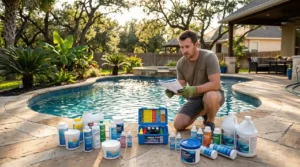
On the surface, handling your own pool care looks affordable. You skip the monthly service fee, you buy some chemicals at the local pool store, and you spend a Saturday afternoon skimming and testing. Simple enough, right?
Here’s where it gets complicated. Pool maintenance costs for a self-managed pool in the San Antonio area add up across several categories that most homeowners don’t fully account with when they make the initial decision to go DIY:
- Chemicals: A full chemical kit (chlorine, pH adjusters, alkalinity increaser, stabilizer, shock, algaecide) runs $80 to $150 per month during peak season, more if you overcorrect or misdiagnose a water issue.
- Testing supplies: Decent liquid test kits cost $25–$45 and need regular replenishment. Test strips are cheaper but less accurate, which leads to more chemical waste.
- Equipment maintenance: Filters need cleaning, O-rings need replacing, baskets need checking. None of that is expensive per item, but it accumulates.
- Your time: This one gets overlooked entirely. A proper weekly DIY routine — testing, adjusting, skimming, brushing, vacuuming, checking equipment, takes 1.5 to 2.5 hours depending on your pool size. Multiply that by 35 weeks of active swim season in San Antonio and you’re looking at 50 to 85 hours per year.
According to the Pool & Hot Tub Alliance, the average residential pool owner who self-maintains spends between $1,200 and $1,800 annually on chemicals and supplies alone — before any equipment repairs enter the picture.
The hidden cost: Getting it wrong
Look, everybody makes mistakes their first few seasons. You add too much pH increaser and your chlorine stops working. You forget to shock after a pool party and wake up to green water three days later. You ignore a slightly odd sound from the pump for two weeks until it stops running entirely.
These aren’t hypothetical situations, they’re the calls pool professionals across Bexar County get regularly. And the pool maintenance costs of reactive repairs are where DIY starts to hurt financially. A green pool recovery service runs $150–$300. A pump motor replacement runs $400–$800. A filter system repair or replacement can hit $500–$1,200. Any one of those in a single season can erase months of “savings” from skipping professional service.
As Bob Vila’s home maintenance guide notes, the most expensive pool repairs are almost always the result of small issues that went undetected or uncorrected for too long — exactly the kind of thing a trained eye catches on a routine visit that a busy homeowner might miss entirely.
So when does DIY actually make sense?
Honestly? DIY works well for homeowners who are genuinely consistent, detail-oriented, and willing to invest time in learning their specific pool’s behavior. If you enjoy the process, have a relatively simple pool setup, and commit to a real weekly routine — not a “whenever I get around to it” routine — you can absolutely manage your own maintenance effectively.
The sweet spot a lot of San Antonio homeowners land on is a hybrid approach: handling the weekly skimming and basic chemical checks themselves while bringing in a professional monthly or quarterly for a deeper service, equipment inspection, and water analysis. That keeps pool service worth it Texas costs manageable while still having expert eyes on things regularly.
What professional pool service actually costs, and what you get for it
Breaking down the real value of professional maintenance
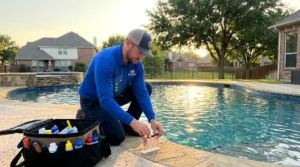
Professional weekly pool service in the San Antonio area typically runs $100 to $175 per month for a standard residential pool, depending on size, equipment, and service frequency. At first glance, that feels like a significant expense compared to buying chemicals yourself.
But here’s what that monthly fee actually covers that rarely gets itemized: a trained technician who knows the specific quirks of South Texas water chemistry, who spots a failing pump seal before it becomes a flooded equipment pad, who notices early algae formation on a back wall before it turns your pool green, and who adjusts your chemistry based on actual conditions, not just a strip test reading.
The CDC Healthy Swimming program consistently emphasizes that proper water chemistry maintenance requires both accurate testing and experienced interpretation of results, two things that take real time and training to develop. A professional brings both on every single visit.
Where the math shifts in favor of professional service
When you factor in pool maintenance costs across a full season, the gap between DIY and professional service narrows considerably, and in some scenarios, professional service actually comes out cheaper.
Consider this realistic scenario: a homeowner spends $1,400 on chemicals and supplies over the season, invests 70 hours of personal time, and hits one significant repair from an issue that went unnoticed — say a $600 pump repair. Total cost: $2,000 plus 70 hours of weekend time.
Compare that to a professional weekly service at $140 per month over nine months: $1,260 total, with chemicals often included or discounted, equipment issues caught early, and zero hours of personal time invested. When you put it side by side like that, pool service worth it Texas stops being a question and starts being fairly obvious math.
The San Antonio factor nobody talks about
Here’s something worth saying plainly: maintaining a pool in San Antonio is genuinely harder than in most American cities. The combination of extreme heat, intense UV exposure, hard water loaded with calcium and minerals, long swim seasons, and frequent dust and pollen events creates chemical instability that requires more frequent adjustments and more attentive monitoring than pools in softer, cooler climates.
A professional who services pools specifically in Bexar County understands those local variables in a way that a generic online tutorial simply cannot account for. They know that after a cedar pollen spike, phosphate levels jump. They know that San Antonio tap water requires calcium hardness management from day one. They know which equipment brands hold up best in this specific climate. That local knowledge has real, measurable value, and it’s built into every service visit.
The bottom line on saving money on pool care in San Antonio is this: DIY is a real option if you’re committed and consistent. But for most homeowners, when you honestly account for time, chemical costs, and the risk of expensive reactive repairs, professional service pays for itself more often than not, especially through a long, demanding South Texas swim season.
If you’re still weighing your options and want to understand exactly what a professional weekly routine covers, our post on weekly pool maintenance in San Antonio Texas breaks down every step of the process in plain language — worth a read before you make your decision.
FAQ
1. Is it cheaper to maintain your own pool or hire a professional in San Antonio?
It depends on how you count the costs. DIY pool maintenance in San Antonio typically runs $1,200–$1,800 annually in chemicals and supplies alone, plus 50–85 hours of personal time over the swim season. Professional weekly service averages $100–$175 per month, often with chemicals included. When you factor in the risk of costly repairs from missed issues (a single pump failure can run $600–$800) professional service frequently comes out equal or cheaper over a full season, especially for busy homeowners.
2. What are the most common mistakes DIY pool owners make in Texas?
The most frequent mistakes include letting pH drift too high (which cripples chlorine effectiveness), skipping shock treatments until the water is visibly green, ignoring early equipment warning signs like unusual pump noises, and underestimating how quickly San Antonio’s hard water throws off chemical balance. Each of these mistakes carries real pool maintenance costs, from emergency chemical treatments to major equipment repairs. Consistency is everything, and that’s exactly where most DIY routines eventually break down under a busy schedule.
3. How much does professional pool service cost in San Antonio TX?
Professional weekly pool service in San Antonio typically ranges from $100 to $175 per month for a standard residential pool. Monthly or bi-weekly services run slightly less. Most professional services include chemical testing and adjustment, skimming, brushing, vacuuming, and equipment checks on every visit. When weighing pool service worth it Texas calculations, factor in the value of early equipment diagnostics and the chemical expertise that prevents expensive reactive repairs throughout the season.
4. Can I do a hybrid approach — some DIY and some professional service?
Absolutely, and it’s one of the most practical options for San Antonio homeowners. Many pool owners handle daily skimming and basic weekly chemical checks themselves while scheduling a professional service monthly or quarterly for deeper cleaning, equipment inspection, and full water analysis. This hybrid model keeps pool maintenance costs manageable while ensuring a trained eye reviews your pool’s condition regularly. It’s a smart middle ground that works well for homeowners who are engaged but don’t want full DIY responsibility.
5. How do I know when my pool needs a professional instead of DIY treatment?
Call a professional when your water stays green or cloudy for more than 48 hours after chemical treatment, when your pump makes new or unusual noises, when you notice consistent water loss beyond normal evaporation, or when your chemical readings seem correct but the water still looks or smells off. These are signs of underlying issues that require diagnostic equipment and hands-on experience to resolve, exactly the scenarios where saving money on pool care by going DIY ends up costing significantly more than a professional service call would have.

One Response